Search This Blog

Thursday, May 31, 2018

Last Chance! Just a few Chicks left

We have just a few chicks left and the Big Brooder is rolling out of the store. The 2018 Chicken Season is over! We will begin again in January 2019. Thank You!


What is left???
1 Buff Brahma
7 Black Australorpe
5 Buckeye


All $2.99 each

Monday, May 21, 2018

LAST CALL!!!!


Image result for chicken image thank you


The 2018 Chicken Season has been Awesome! Thank you all for buying your chicks from Woodville Ace Hardware this year. Please continue to read the blog, I do weekly postings through out the year.
This Thursday May 24th will be our last chick shipment for this year. We will pull the big brooder, clean it up and store it till next January. If you really want or need something we can try to special order it. This time of year most hatcheries shut down their main layer sales but some birds can be ordered.


We still have chicks in our brooder, so come get them while they last.
Red Cross (Red Sex-link)
Brown Leghorn (white egg layers)
Buff Brahma
Barred Rock
Black Giant


Thursday's shippment
Buckeyes
Araucana
Black Austalorpes
Buff Orphington
Golden Comets (Gold Sex-links)

Tuesday, May 15, 2018

Entertain your Chickens

Image result     


Chicken Toys - Why they are important and how you can provide them

By Banriona · Nov 15, 2013 · Updated Nov 15, 2013          

                                            
A chicken that is not provided with adequate enrichment and mental stimulation will be more inclined towards problem behaviors. Feather pecking, bullying, egg eating and even cannibalism are almost always a result of chickens that are confined without proper enrichment. The winter months that necessitate closer quarters and less foraging opportunities is when chicken toys become even more necessary. This is where the expression “feeling cooped up” comes from after all.

You’re probably already giving your chickens “toys” without realizing it. Any activity that encourages natural chicken behaviors can be considered playing. And any item that encourages that activity is a “toy”.

Some enrichment activities you are probably already providing include:
  • Cleaning out the coop and run and other daily tasks such as egg collecting. This changes their environment and chickens are intrigued by anything new.
  • Inspecting the health of your flock and any other direct human contact.
  • Providing table scraps, weeds, dirt clods, fodder, flats of sod etc.
  • Letting them out to roam the run or free range.

As the winter months approach, and time and space constraints increase we find ourselves looking for more. What you provide need not be expensive or ornate, or even pretty. Most of the best toys are absolutely free. Below is a list of toys that many people have found effective in keeping their chickens entertained and happy.

Top Toys for Adult birds:
400.jpg
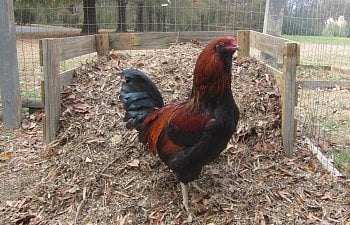
Compost piles are excellent sources of enrichment and food. Simply create your pile of compostable material and let the chickens work it at will. The chickens will enjoy digging up the bugs and worms and will be warmed by the heat that is created from the decomposing material. Keeping a compost heap or pile in the run also reduces the amount of foraging/digging they do elsewhere in their run which will help the vegetation grow and prevent a bare muddy run. (The one pictured is a frame made from an old privacy fence that was falling down on our property filled with yard and kitchen waste.)

Hanging cabbage, squash, lettuce, kale, spinach etc. from a string or bungee cord is a popular toy with a nutritional boost. If you can stick a skewer through it or tie a string around it then it is fair game to be hung either on the fence of the run, from the ceiling in the coop or anywhere else they might be able to play tetherball with it.


Interactive Treat dispensers. Anything from an empty beverage bottle with holes drilled in it to cat and dog toys designed with treat dispensing holes in them. If you can fill it with some form of treat and poke holes in it so that the chickens can kick it around and peck at it to make the food come out then you have yourself a toy. There are some companies that sell chicken treat dispenser toys as well. (Pictured is a reused plastic peanut butter jar with ¼” holes drilled in it and filled with wheat seed)
400.jpg
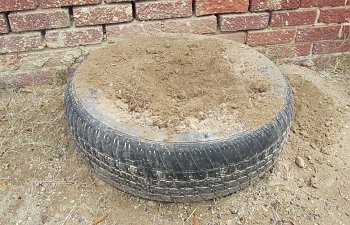
Dust Bathing Area. Provide an area where they can dust bathe freely. Any bucket, bin, old tire or any other device filled with dirt for them to bathe in is perfect. It will encourage them to do their dust bathing in one approved location and limit the amount of holes they dig elsewhere for the purpose. You can mix in some Diatomaceous earth or wood ash as well to help deter mites etc., but it isn’t necessary. (Pictured is an old tire found on our property and filled with dirt.)
400.jpg
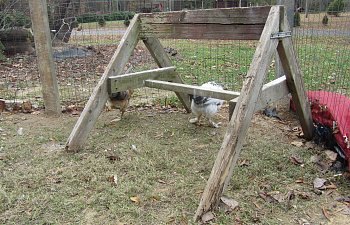
Climbing/Perching places. The animal kingdom at large takes the term “top dog” pretty literally. Any spot that allows the head of the flock to perch above everyone else will be prized. Roosters especially prefer a spot where they can perch above the flock and crow their ownership of it to the rest of the world. Even an old tree that fell down on your property (or you cut down) can be erected in the run for this purpose. You could also build your run around an existing live tree for the purpose. Live trees also provide protection from overhead predators as well as forage and shade. (I found the sawhorse in the picture in the woods of our property. A simple sawhorse can be built out of one or two 2x4’s inexpensively, or salvaged pallets.)

Toys for Chicks: Non-food toys are best for chicks as their nutrition requirements depend mostly on their feed unless you are an experienced chicken nutritionist or a mama hen.

  • Pet bird toys (parakeet shred a box &/or bird burrito) or any small kitten or baby toy such as fake mice, small balls, rattles, etc. The more colorful the better since chickens see color better than humans do.
  • Mirror (the unbreakable varieties for babies cribs or parakeets etc. are ideal. Better safe than sorry.) An old cd on a string would be an excellent substitute for this as well. Not only will they enjoy their reflection, they will also enjoy the rainbows that will inevitably end up on the walls etc. of the brooder area. An old cd hung in the run area not only provides entertainment but can aid in deterring hawks and other aerial predators.
  • Bin filled with sand (doubles as grit for wee ones also) or dry dirt for dust bathing.
  • Tunnel made from an empty Oatmeal container.
  • Make a chicken swing out of some rope and a large branch or a 2x4. This is great for helping them build the muscles necessary to keep them on their roosts as well as gives them a place out of the litter to warm their feet.

Other great toy ideas that are inexpensive or free to buy or make:

  • Old stump or branch full of bugs, grubs and other creepy crawlies. This works for any piece of wood. Just leave it in one place for a few days to a week or so and let the bugs seek refuge under it – then just flip it over and let the flock go to town.
  • newspaper to shred
  • Cricket tubes (or just let crickets loose in the coop when they will be confined for an extended period of time). You can find these at most pet stores or tackle shops.
  • Sunflower heads complete with seeds
  • A post Halloween jack-o-lantern or any large squash or melon. Just drop it on the ground from high enough that it splits and let them do the rest.
  • Suet cage or fruit basket stuffed with table scraps
  • Old cd’s that are scratched beyond repair are great hung from a string along the fence of the run at or just above pecking height. If you are REALLY adventurous you can blow up a balloon, smash the cd’s and then glue them on to the balloon in a mosaic pattern and hang in the run/coop to catch the light.
  • Boiled spaghetti is a special hit. Dye the noodles different colors for added fun.
  • DIY bird feeders. Just do a Google search and you’ll come up with thousands of ideas. Just use scratch grains or BOSS or whatever else you have on hand. Molasses is a great tool for creating enough structure to hold it together enough for them to peck it to death.

Use your imagination and have fun. If it encourages their natural behaviors of eating, scratching, pecking, bathing, flying, perching or flock socialization then it is a good toy. They don’t have to be pretty and they don’t have to cost anything. If they don’t like it you can always take it away and try again another time, or move on to the next item. Enjoy your flock!

Tuesday, May 8, 2018

Mosquitoes in your Coop?


tHE LAST FEW WEEKS I HAVE BEEN WORKING IN MY BACKYARD FINISHING UP MY chicken COOP AND run. i AM BLESSED WITH A BEAUTIFUL CYPRESS SWAMP AND A HOST OF WILD LIFE INCLUDING VERY HUNGRY MoSQUITOES. i AM BUILDINg TO PROTECT FROM RACOONS, SNAKES AND OWLS BUT I THINK THE MoSQUITOES ARE GOING TO BE THE REAL CHALLENGE. Anice


http://www.scoopfromthecoop.com/foiling-the-hungriest-chicken-predators/

Foiling the Hungriest Chicken Predators

Keeping Mosquitoes and Other Biting Insects at Bay

Description: http://scoopfromthecoop.nutrenaworld.com/wp-content/uploads/2016/08/white-blue-egger-roo-300x225.jpgChickens make a delicious dinner but not only people enjoy dining on them. Raccoons, opossums, and other furry or feathery predators kill and eat them with enthusiasm.

Most predators work the night shift when sleeping chickens are nearly comatose and easy to snatch.  Wise owners secure doors, windows, and pop holes at dusk. If predators can’t access chickens they can’t kill them.

Unfortunately, a closed door won’t exclude blood loving mosquitoes, gnats, and other insects.
They can’t easily bite through thick feathers but fleshy combs and wattles are blood rich and targeted.  A few insect bites won’t kill a chicken but constant biting drains blood, introduces possible diseases, and pesters birds trying to sleep.

Hungry mosquitoes don’t limit their hunt to chickens. They also relish human blood and swarms of the pests cruising around the coop make life miserable for both hens and people. Reducing their numbers makes life more comfortable for both the birds and their owners.

Fogging the coop area with insecticides will kill bugs but there are better ways of reducing their abundance without using toxic chemicals. A three-pronged approach will put a big dent in insect numbers.

REDUCING SKEETER REPRODUCTION

Female mosquitoes lay their eggs in standing water. Within 48 hours they hatch into larvae that mature into adults in another week to ten days. Newly emerged female mosquitoes are biters that require a protein rich blood meal to produce eggs for the next generation. Males are content feeding on nectar.

Mosquitoes can’t reproduce without standing water. Chicken keepers often carelessly leave water filled containers in the yard and chicken run. Fount type waterers and buckets can breed mosquitoes. So, will water filled toys, trash, old tires, and anything else that holds moisture. Even an old can will produce hundreds of biting skeeters.

The solution is simple. Drain everything that holds water. Buckets and fonts chickens need to drink from should be emptied at least every couple of days and refilled with clean fresh water. Waterers that allow chickens to drink from tiny spouts probably won’t breed mosquitoes and may be the best choice in buggy areas. Gutters are notorious for holding puddles of rain water that produce mosquitoes. Make sure they drain completely after each rain. Rain barrels that store gutter water are handy but should have tight fitting lids with netting covered holes to exclude laying mosquitoes.

Insects don’t respect property lines. Encouraging neighbors to keep their containers drained will help reduce numbers throughout the area.

ENCOURAGING MOSQUITO PREDATORS

Bats, many birds, toads, fish, and frogs all love dining on insects. Welcoming them to the yard will reduce mosquito numbers. Goldfish love eating larvae and a few stocked in tanks that can’t be drained will rid them of larvae. Creating damp dark places in the garden welcomes toads to move in. They are effective mosquito eaters. Bats, swallows, swifts, and many other birds devour skeeters. Although they prefer roosting in hollow trees often they’ll occupy special houses easily made at home or bought from garden supply stores.

EXCLUDING SKEETERS FROM THE COOP

Raccoons easily rip standard mosquito screening but can’t force their way through stout wire. With mosquitoes, it’s just the reverse. They cruise right through the heavy-duty wire that keeps out the racoons but can’t penetrate insect screening. The solution is simple-install double wire barriers over each coop window. Place raccoon proof heavy wire on the outside of windows and mosquito screening inside. This lets cool summer breezes enter the coop while keeping both insects and mammals at bay. Mosquito netting is made of nylon or aluminum and can be purchased in rolls from hardware stores. It is easy to cut it with heavy duty scissors and staple it to the inside of windows.

It’s nearly impossible to completely eliminate mosquitoes, gnats, and other biting insects from a chicken coop or run, but diligently eliminating standing water, encouraging insect predators, and double screening coop windows will make life more pleasant for both hens and their owners.

Monday, April 30, 2018

Cleaning The Chicken Coop and Run


Image result for chicken coop images
Nine Tips on Cleaning your Coop and Run


This weekend I got a call from a chicken customer that had moved her young chicks into a coop that had been the home for her healthy flock of adult chickens. The adults got a new home. Even though she had no problems before the move, several of her chicks became ill shortly after the move. The coop and run had not been cleaned before the move. It appears the only factor was that there may have been some bacteria or virus in the coop or run that made the chicks sick. I probably would have done the same thing. Making us aware how easy it is to spread diseases that we don't even know we have. Don't take the chance. I found this article on cleaning your coop and run that I wanted to share. Keep them clean and keep them healthy. Anice
“A place for everything and everything in its place.” — Unknown


Does this sound familiar? It is a quote that says that everything should have a place to be stored and when not in use it should be returned to that place.


Are you a believer in this type of cleanliness? Well, if so, then this is going to be a good read for you. If you have chickens, then you’ll be curious to know how to clean their coop I’m sure.
Now, if this seems like common sense to you, great! But keeping your birds’ coop clean is of great importance if you want a healthy flock and lots of eggs.


Here is how you clean your chickens’ coop:
1. A Clean Place to Roost


My chickens like to roost just like most other chickens. But the thing to remember is that a sleeping chicken is a pooping chicken.
So it shouldn’t come as a huge surprise to anyone that roosting bars get really nasty. And with that I’d like to introduce you to my cleaning tool of a choice: a garden hoe.
Yes, a garden hoe. It works wonders. I’m able to scrape everything clean and not have to get nasty in the process. I do this by simply running the garden hoe over the roosting bars repeatedly until I get all of the poop knocked loose and off of the roosting bar.
If necessary, you can spray the roosting bars down with a water hose. Depending upon how nasty they are, I will often take a sponge soaked in white vinegar and run them over the bars as well. This does help to sanitize and deter bugs.
2. A Clean Place to Lay


Description: Photo by byexample.net


Do you recall how great it feels to get into bed when you’ve put clean sheets on it? I love that feeling.
Well, so do your chickens. In fact, if their nesting boxes aren’t clean it can actually deter them from laying.
So if you want to up your egg production then be sure to clean your hens nesting boxes regularly. When doing this, again, I use my trusty garden hoe. I just pull out all of the bedding and scoop it onto the ground.


The great thing about this is it doesn’t take very long at all. Then, I place fresh material back inside their nesting boxes.


Now, you can use many different materials. I usually use: shredded paper, hay, straw, or mulch. A lot of people use cedar pine shavings and that is fine. I don’t because I like to use what I have on hand.
After this, you’re ready to move on to the next area of the coop.


3. A Clean Place to Walk


How gross is it when the inside of your home has a dirty floor? Believe me, I sweep my floors every day (some times multiple times a day) but with 3 boys I always seem to have dirt in my house waiting to swept again the next day.


Well, it is kind of the same with your chicken coop. The difference is chickens poop everywhere. Literally!


So how you clean their floor will depend upon your method. I use the deep litter method. This basically in tells me adding more material to the coop floor so the waste can compost inside the coop.


Then I’ll come back a few times a year and scoop it all out as great compost for my garden. If you use this method, then you’ll need to let all of the waste you’ve scooped from the roosting bars and nesting boxes remain in the floor of the coop.


Next, you’ll go over the coop floor and level everything out. If there are bare spaces or particularly gross spaces, then add some more litter to the floor of the coop.
Again, I use wood chips for this. My chickens love it because they can scratch around, and I’m happy because it makes my coop look and smell fresh.
However, if you have a concrete floor or any other type of floor in your coop then you’ll need to clean it.
So begin by gathering all old material or waste that is on the floor and scoop it out. You can still use the material in your compost bin so you don’t waste anything.
Then you’ll need to either add more material back to the coop floor, or if you have a concrete (or other washable floor) then you’ll need to hose the floor down.
Once your floors are clean, you’re ready to move on to the final stages of coop maintenance.


4. Sprinkle Some Fairy Dust


I love diatomaceous earth. The stuff works wonders on a lot of different things. It can be used to keep fleas off of your dog. A lot of people in my area sprinkle it on their yard to kill ticks and other unwanted critters.
But you can also use it to help keep mites out of your chicken coop and it is totally natural to boot. Which is why I sprinkle it in the nesting boxes and on the coop floor. This way when my chickens dust themselves, they are putting DE all over them and deterring pests from climbing on them.


Also, I worm my chickens with DE a few times a year. Basically, when you begin to see poop on your eggs a lot, then you know it is time to worm them.
So a lot of times when I am cleaning out their coop, I will sprinkle DE inside their food as well. Then they eat it and naturally worm themselves.


As you can tell, sprinkling DE is something that has a ton of benefits, is very natural, and should be included when cleaning out your coop because it helps keep everything and everyone maintained and healthy.
5. A Clean Buffet


Have I mentioned that chickens poop everywhere? I thought so.
Well, they do! That is why it’s important to keep their food and water away from nesting bars or nesting boxes because (you guessed it!) they’ll poop right in or on them.


So our feeder is hanging right in the middle of the coop for this reason so they can’t possibly poop anywhere close to on it.
Plus, their water system is right next to it. I’m going to share a frugal tip about watering chickens. When we first got chickens we invested in this fancy watering system because we thought it would be the best for them.


Ummm…no. Chickens actually like to gulp water instead of having to peck to get it out.
So after realizing this, we tossed the fancy watering system and put a bucket in its place. It is a smaller bucket so the chickens can drink from it, but they are so happy because they can easily stick their head in it and guzzle water.


Now, if you have a smaller number of chickens you can probably get away with one of the smaller poultry waterers. We have enough chickens that we’d have to have multiple of those and to be honest, I’m frugal and don’t really want to make that investment when a bucket works just as well.
So whatever you use to feed and water your chickens, you’ll need to clean them. Take them out of the coop and hose them down. That way any dirt can be hosed off and then allow them to air dry. This keeps everything clean and that way nothing gross can begin to grow inside of them.


And ultimately, it is just one more step to keep everyone healthy which is the ultimate goal.
Now, I will offer an added tip. When I put the food and water containers back inside the coop and refill them, I will some times add some ACV and garlic to their water. It supports their immune system, and I especially do this during the winter months.


6. A Clean Place to Run
If your chickens aren’t free range then they most likely have a run or a chicken yard of some sort. My chickens are allowed to free range in our fenced backyard during the fall because they help clean up our garden beds.


However, the rest of the year they have to be put up because we grow a lot of items in garden beds inside our fenced backyard. This means that they have a fenced off chicken yard so they can still get out and peck in their own area.
Well, you can’t forget about these areas when cleaning. So you’ll need to use a rake (or hoe) to level out the litter material that covers these spaces. Add some more material if needed as well.


Basically, you just want to clean up any mess that might be lying around. It isn’t a hard job. It just needs to be maintained so not to become unsanitary.
Honestly, I don’t have to scoop this area out but a few times a year when I need compost. However, if you don’t practice the deep litter method, then you’ll need to empty it when cleaning for sanitation purposes.


7. Give Your Chickens a Mani/Pedi
When cleaning your chicken, it is also a good time to check on the health of your birds. Illnesses occur in chickens from time to time. Being proactive can be the difference between life and death for your flock.


So when cleaning out the coop, try to remember to check their feet for bumblefoot and look at the over health of each bird. This way if one of them is breathing funny or has any other abnormality, it shouldn’t go for very long without you noticing it.
As you can tell, this step is pretty easy. It shouldn’t take you very long, but it could be the difference between having a healthy productive flock or a sickly flock.


8. Mend the Broken Places
Coops need repair every now and then. It is important to keep them well maintained for the safety of your flock.


So when you are cleaning, pay attention if there are any damaged areas. If so, then fix it. Most repairs to a chicken coop don’t take more than a few minutes (unless it is something major.)
One of the most common repairs I see in our coop is that the chicken wire is becoming loose and beginning to sag. A few whacks with a slap stapler and we are back in business.


So just keep an eye out for any repairs that need to be made and try to make them as you are cleaning the coop so you don’t forget about them.
9. How Often I Clean
Description: photo by one hundred dollars a month


Well, all of this advice is great and all but how often should you actually do these steps? For me, I clean my birds coop once a week and do in between cleanings every other day.
The reason is because my birds are super picky. I guess I’ve spoiled them. We have plenty of roosting space but for whatever reason, certain birds want to sleep in nesting boxes.


And do you remember how I mentioned that a sleeping bird is a pooping bird? Well, you can imagine that my nesting boxes get pretty gross.
So I clean them out almost daily. Then I do my big over all clean every Monday morning. If I do it on a weekly basis (and move quickly) it doesn’t take more than 15 minutes or so from start to finish. Staying on top of things really saves you time in the long run.