Chick season 2022 is here! We begin with our first batch on Jan 27, 2022. Anice ChickenLady, has retired due to health issues. But Woodville Ace will be doing chicken business as usual. Join our Woodville Ace Chicken Group on Facebook, a link is in the left hand column.
On this blog you will find a list of hatch dates for birds ordered, CLICK ON "What's coming in?". To get your pre-paid special orders in call or come in to assure you get the birds you want.
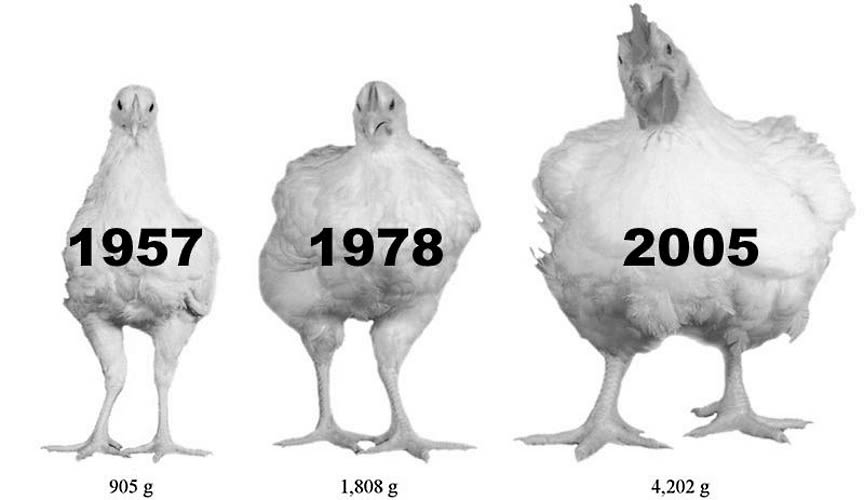
Most of us think of our chickens as egg producers and pets. But don't most of us eat chicken often? Do you ever think about how chickens have evolved? Most of the world has chicken several times a week in their meal plan. We don't normally sell meat chickens here at Woodville Ace but we have and can order them. A few years ago we raised some Cornish Rock on our farm. It was amazing to see how fast these chickens grew and how big they got. It was a messy process, they eat and poop, and eat and poop, and grow rapidly. We processed them at 12 weeks instead of the 8 weeks that is recommended, and they were so big we had to use 2 gallon ziplock bags to put them in the freezer. But 14 chickens kept us in chicken for months. I could use one chicken for several meals, they each weighed between 8 to 10 pounds. But if you are planning to try this next year on your farmstead be prepared for the work. I recommend a separate coop just for raising meat chickens. Keeping them clean and fed with a high protein feed is your top priority. When the day comes to slaughter your chickens, be well prepared for the process way ahead of time. We skinned ours instead of plucking the feathers, which made the process much faster. But in the end it was worth all the work. Just knowing you raised your own food and you knew what went into them, was a reward in it's self.
I found this article today about what has made our chickens so different through the years. And how we are feeding the world with the genetic breeding of our meat chickens.
We sell several ready made coops here at Woodville Ace that are easy to assemble and ready to go. But I am a DIY kinda person and have been thinking about my dream coop. I found this site that I want to share with our readers.
Sex-Links
are bred to produce eggs and lots of them, and to consume the least
amount of feed. You get a sex-link from breeding two pure bred
chickens together. Which makes them a, hybrid. When you breed your
top layers together you come up with a laying machine. There are many
different hybrid breeds and one of the most common is known as the
Golden
Comet.
Eggs:
Around 280 eggs per year, medium sized and brown eggs.
Color:
Sex-links can be black, red, golden, brown, with soft white tail
feathers.
Character:
They tend to be a very tough and resilient chicken and rarely ever
turn broody. If you are looking for an all year round egg layer who
is easy to look after, a sex-link chicken is definitely the bird.
2.
Rhode Island Red
Rhode
Island Red Chicken are known as a ‘dual purpose’ chickens. This
means they can be raised for either eggs or meat. They are one of the
most popular backyard chicken breeds because they are tough and lay
lots of eggs.
Eggs:
Around 250 eggs a year. Eggs are brown and medium sized.
Color:
Dark red to brown and black feathers.
Character:
They are more than capable of looking after themselves, and are well
known for being tough to down-right aggressive. The hens can be
friendly and are usually chosen by first time chicken keepers.
3.
Leghorn
Leghorns
were brought to the States from Italy back in the 1800s and have made
the perfect backyard chicken ever since. Another excellent choice for
first time chicken keepers.
Eggs:
Around 250 eggs per year. One of the few chickens that lay white eggs
and will be medium sized.
Color:
Two colors, white and brown. White has a full white body and large
red comb. Brown is golden brown and has white ear lobes, also known
as ear rings.
Character:
If you are looking to tame your chickens, Leghorns may not be your
choice, they are shy and hard to tame. Yet, hold their own in the
flock.
4.
Barred Rock
The
Barred Rock is an ideal pick for a first time chicken keeper who is
looking for a hen that lays eggs roughly once every two days. Barred
Rocks are beautiful in appearance.
Eggs:
Around 200 eggs a year. These eggs will be medium sized and are a
light brown color.
Color:
They are mostly black to dark grey with white stripes wrapping around
their body.
Character:
Barred Rocks are a large bird that is much better suited to the free
range lifestyle. They are very friendly birds who can easily be
tamed. Hens sometimes go broody.
5.
Araucana
Araucana
also known as the Easter Egger for it’s blue to green colored eggs.
There are slight differences between the Ameraucana in breeding. The
body type is different than your common chicken, their beauty is in
the eye of the chicken lover. Hens have long skinny necks and rarely
have tail feathers, roosters can be a thing of beauty and color.
Eggs:
Around 250 eggs per year. The color will be from baby blue to drab
army green, small to medium size eggs.
Color:
As chicks they look like little chick monks with stripes down their
backs. Colors can range from red to silver. Rarely blacks or dark
browns.
Character:
Don’t make good pets. They are skittish and keep to themselves, but
are excellent layers and hardy in the flock.
6.
Buff Orpington
One of
the most productive layers, with a great personality and hardiness.
Personal favorites among chicken keepers. They originate from Kent,
England. Make an excellent chicken for your back yard flock. Also
known as a duel purpose bird.
Eggs:
Around 180-200 eggs a year. They have a tendency to get broody during
the summer months which is why they lay less than the other breeds
mentioned on this list.
Color:
They are a beautiful golden-yellow and have a thick layer of
feathers, making them appear to be a larger bird than the really are.
Character:
Buff Orpingtons are one of the tamest breeds you can get and will
make a great garden pet. Within no time you can train them to eat
from your hand and socialize with you.
7.
Black Australorp
The
Australope is Australia’s national chicken breed. Known as a good
utility bird with a great personality and hardiness.
Eggs:
Around 200 eggs per year, medium size and brown.
Color:
Black with iridescent green color to their tail feathers. Soft fluffy
feathers.
Character:
The Australope is docile and quiet, makes a good pet and addition to
any flock.
8.
Dominique
The
Dominique once thought to be extinct, has made a big come back to the
US since the 1970’s. This bird looking a lot like it’s cousin the
Barred Rock.
Eggs:
Around 200 eggs per year. Medium brown.
Color:
Feathers are black to dark gray with white to cream bars giving the
bird a “hawk Coloring” well known to help protect this good free
ranger from predators.
Character:
Hardy and are good free range birds, calm, gentle and easy keepers.
9.
Brahma
The
Brahma is known for it’s furry (feathered) feet. It is a solid
heavy bird with the origin from India.
Eggs:
Not as productive as some on this list but is a good winter layer,
the larger breed is not as effected by cold weather. Around 180-200
eggs per year. Brown medium in size.
Character:
This big gentle bird is very calm and easy to handle and work with.
They seem to be the peace keepers of the coop.
10.
Wyandotte
The
Wyandotte is one of those birds that you love to have in your flock.
They are American bred and their name comes from the Wendat tribe of
Native Americans from the Northeast. They are good cold-hardy birds.
Eggs:
Good but not the highest on the list 150-200 eggs per year. Eggs are
brown and mediums in size.
Color:
This is a bird of many colors, but the gold and silver are most
popular. Ranging from buff to blue. It is the feather patterns that
are unique and make this bird something special. The feathers are
lined in black makings, outlining each feather into a patterns.
Character:
The Wyandotte is a very adaptable bird and does well as either free
ranger or in a coop. They are calm and quiet.
How
to Keep Egg Production High
(reference:www.thehappycoop.com)
Chickens Egg Laying Reducing Over Time
Just
because you have a breed who can
lay lots of eggs, doesn’t mean they will
lay lots of eggs.
Many
things can affect how many eggs a chicken lays. Their diet, age
and access to daylight are all important.
Age
It’s
a sad fact of life that older chickens just don’t lay as many eggs
as younger chickens.
A
chicken’s first year of laying eggs is always
their best.
Chicken facts… from many different sources. I have chosen
the ones that I find are interesting and entertaining. Enjoy!
In Japan, people eat fried chicken and strawberry shortcake
on Christmas Eve.
Chickens are related to the Tyrannosaurus Rex.
Chickens will be less nervous if you walk backwards when
entering the coop.
Like other birds and mammals, chickens experience REM sleep,
which is associated with dreaming.
Chickens are able to understand that when an object is taken
away and hidden from them, it still exists. Young human children are unable to
understand this.
Chickens can’t taste sweetness in foods however they can
detect salt, and most choose to avoid it.
Chickens have a great memory. They can distinguish between
over 100 different faces of people or animals.
Chickens have full-color vision.
Domesticated chickens have been bred by humans from Asian jungle
fowl.
There are over 25 billion of them in the world, that's more
than any other bird.
The rooster's wattle is used to bring attention to him when
dancing for the hens.
The largest chicken egg weighed nearly 12 ounces.
The waste made by a chicken in its lifetime can make enough
electricity to run a 100 watt bulb for five hours!
Reportedly the record number of eggs laid in one day by a
chicken is seven.
The fear of chickens is called Alektorophobia. [IMG]
These are my top 15 picks for today, I hope you enjoy them. I will post more at
another time.
A few months back when the temperatures started to climb into
the 90's a customer called me concerned about her chickens. She asked me, “how
hot does it have to get before my chickens start to die”? Being a farmer and a
native Floridian I never really thought about chickens in the heat of summer.
Always providing shade and lots of water and expecting to lose a few from time
to time, just to what I call, natural causes. But I started really looking at
how the heat effects chickens during our hot summer days, with the added
humidity.
The summer heat is potentially
fatal to our chickens. How do we spot heat exhaustion and what can we do in
time to save them.
We don't really think about the heat in our environment until
we walk out of our air conditioned house, car or work place, and we are hit in
the face with a blast of hot humid air. Then you walk into your chicken coop and your
chickens are panting, like the family dog. They pant because they don't sweat.
In nature, animals adapt to the heat and the cold by regulating their body heat.
If your chickens are free ranging they will take care of themselves. They will
find a cool shady spot and sit quietly during the heat of the day. They will
dust themselves to protect their skin from excess sun, heat and parasites. They
will seek out cool damp spots under shrubs and bushes that trap in the moisture
from the afternoon thunder storms. But if your chickens are contained in a coop,
they can't take care of their natural need to protect themselves from the heat.
That is up to us as chicken keepers.
First sign they are too hot is the panting. A chickens normal
body temperature is between 104 to 107 degrees. They can tolerate heat 10 to15
degrees lower their normal temperature but once it reaches higher than 95
degrees the real stress begins. Cold isn't really a problem to them because they
have feathers and thick skin to protect themselves. But heat and humidity above
50% which we know increases the intensity of the heat can start to stress their
bodies.
At what temperature is the
Chicken effected?
Idea temperature range for chickens is: 65-75 degrees.
Starting to feel the stress: 75-85 degrees, slight reduction in feed consumption. Egg size may
be reduced and shell quality may be effected.
Heating up now: 85-90
degrees, feed consumption begins to fall off, weight gain slows, egg size
and shell quality declines, heat stress starts to effect there healthy lives.
Getting too hot: 90-95
degrees, feed consumption noticeably declines. Starting to reach into the danger
zone, for heavy layers and meat bird. The more body weight the more they are
effected. Birds become droopy, and listless.
Beginning to enter the Danger Zone: 95-100 degrees, may stop eating completely, egg production may
stop, showing effects of heat exhaustion, lethargic, staggering, extreme
panting, labored heavey breathing. Consuming large amounts of water, diarrhea, dehydration, rapid weight loss.
Danger Zone: Over 100
degrees, possible heat stroke, older chicken and heavy breeds may die due
to depletion of electrolytes. Extreme rapid breathing and panting, kidney
failure may occur, weakened immune system in unhealthy chickens, depletion of
calcium needed for egg production. Death.
There is no 911 for chickens with heat exhaustion, it is all
up to you now! Once you are in an emergency situation all you can do is get
them cooled off fast. Spray them down with water, soak their coop and if
possible get them shade and a fan. They are not going to be happy with any of
the actions you have to take, which is going to stress them out even more. Get electrolytes into them the best you can. You
may need to use a syringe to inject it into their mouth if they are
severe.After care is going to be
assuring they have plenty of good high quality feed, electrolytes, added
calcium for egg production and protein for weight gain. And then you modify
your coop to provide more shade, better ventilation, and a cooler environment
or free range your birds.
Prevention of Over Heating in
your coop
When designing your coop, choose a location with lots of shade
trees, if this is not possible on your farmstead design your coop with a high
pitched roof to allow good air circulation.
If you already have a coop, create open air shaded areas with
solid roofing. In a pinch, use tarps or easy up tents to create shaded areas.
Adding a fan in enclosed areas such as your roost and laying
box area.
Misters help cool air temperature. Even a garden sprinkler, during
the heat of the day. Wet the coop floors, but with moderation, this can cause
mold and mildew over time.
Don't over crowd your coop, give plenty of space per chicken
in the shaded areas.
Feed your chickens early morning or late afternoon, not in
the heat of the day.
Keep coop clean, chicken manure creates heat when
decomposing, adding to the heat over all of the area.
Keep water containers clean and filled, add electrolytes
during hot days.
Give your chickens watermelon, they love it and it is a nice
cool down snack.
So now that your chickens are cooled down, you can sit in the
shade with your chickens and share a slice of watermelon.
Everything You
Ever Wanted to Know About Chicken Eggs
Updated on August
6, 2016
White or
Brown?
There seems to be
a lot of debate about which is better, white eggs or brown, and depending where
you are you are likely to get all sorts of answers. The French, for instance,
believe the darker brown an egg is the better it tastes. They've even developed
a breed, the Maran, that lays eggs that are a deep chocolate brown. So what is
the difference between white and brown?
It basically
comes down to breed. Some chickens lay brown eggs, some lay white eggs, but it
goes deeper than that. Breeds that lay white eggs tend be leaner breeds that
handle extreme heat very well. Brown egg layers tend to be very large with
thick feathering making them more suitable to extreme cold and more susceptible
to heat stroke. Because of this most eggs sold in the southern United States are
white and most of the eggs sold in the northern United States are brown.
Are there
other colors of eggs?
Yes, some breeds
of chickens are known for laying blue eggs. This might be because a few
centuries ago some chickens bred with pheasants who have colorful eggs. Hybrids
like these are unusual but not impossible. As far as I know no one is currently
trying to make new lines of these hybrids.
Ameraucana,
Arucauna, and Cream Legbars are three breeds known for blue eggs. When these
birds are bred to a brown egg laying chickens the resulting hens will lay green
eggs. These, along with the blues, can vary in tint and depth of color.
There is a bit of
debate over the differences of these colored eggs. Some people feel they taste
better, others think that they may have nutritional differences. I have yet to
see any scientific studies.
Yolk Color
The color of an
egg yolk should be very bright yellow or a deep orange. The difference in color
is based on what the chicken is eating. Chickens who only eat the grain feed
given to them will lay eggs that are yellow. Chickens that are free range and
eat mostly bugs and vegetation will produce these orange yolks. There may be
nutritional differences but I couldn't definitively tell you what they are.
Fertile or
Infertile?
Many people think
that you need a rooster for a hen to lay eggs. This just isn't so. In fact,
most of the eggs you buy at the grocery store (unless otherwise labelled) are
in fact infertile. If there's no reason for a commercial egg farmer to have
roosters they won't bother. Most of the hens producing eggs today will have
never seen a rooster in their life.
However, I know
some people buy their eggs from farmer's markets or directly from the farm. How
can you tell if those are fertile? It's really quite easy. Once you crack an
egg open look for a white spot on the yolk. If you can't see it use a spoon to
roll the yolk around until you can. If the white spot looks like a dot it is an
infertile egg. If the white spot looks more like a doughnut or bulls eye it is
fertile.
You may ask why you'd want a fertile egg. The answer is pretty simple. People
who raise chickens often prefer raising their own instead of buying new chicks
every couple of years so they keep a rooster around. However every egg is not
going to be wanted for hatching, instead the extras are sold to be eaten. In
the meanwhile the rooster will keep the hens happy and might even defend them
from predators. Some people claim fertile eggs taste better. This appears to be
a matter of opinion.
Does size mean
anything?
In the stores you
can usually find small, medium, large, and jumbo or extra large eggs. You might
wonder why this is. Some may speculate this has to do with breed but in the
commercial industry this usually has more to do with a hen's age. The older the
hen the more likely she is to produce these larger eggs. In fact some breeds
like the Rhode Island Red are so notorious for this that once they start
producing eggs too big for sale they're slaughtered for meat. The largest
chicken egg on record was over 7 ounces in weight!
As far as
backyard flocks go some of the smaller eggs are indeed from bantams. Bantams
are small breed chickens. They can lay just as many eggs as their larger
counterparts but they'll be considerably smaller. In fact I have some Seramas,
the smallest chicken breed in the world, and their eggs tend to be around 0.9oz
in weight, as compared to a normal large store bought egg which is 3oz. Bantam
eggs usually have much more yolk than white in them and are just as edible.
Many people prefer bantams simply due to their smaller space requirements.
How can you
tell if an egg is fresh?
It’s a bit
disturbing to know that some eggs are sitting on a shelf somewhere for up to
six weeks before someone buys them. So how can you tell if an egg is fresh?
Easy. If you put
an egg in a bowl of water and it sinks to the bottom and lays on its side than
it is as fresh as you can get it. If it sinks but stands on its end then it is
still fresh enough to eat but it is getting older. If it floats to the top of
the water its an old egg. Sadly most of the eggs I bought at the grocery store
were this way until I invested in my own laying hens. I can profess the fresher
the egg the tastier they are!
There are also
other ways to tell if an eggs is fresh. For instance if the shell seems
unusually thick than it is fresh. If the yolk stands really tall after you’ve
cracked the egg it is fresh. If the yolk has wrinkles or dissolves into a
puddle when you crack it open than it is an old egg.
Can you hatch
fertile eggs?
Yes and no.
Although you will sometimes see fertile eggs at your local health food store
they have been refrigerated and besides this they may also be old. Normally a
hen will lay an egg every other day (or sometimes every day) until she feels
she has enough eggs. At this point she'll go broody—meaning she'll start to lay
on the eggs instead of abandoning them as she's done in the past. Only then
will the eggs start to develop and after twenty one days all the chicks will
hatch out, despite being laid on different days. The problem with this is that
the older an egg is the less likely it is to hatch once its incubated. Most
breeders don't use eggs past ten days of age, although they can technically
hatch as old as three weeks of age, there just won't be as many. Before being
incubated the eggs must not freeze or get too cold, this will kill it before it
has a chance to start developing.
If you really want to hatch some eggs you're much better off buying
"hatching eggs" from your local farmer or breeder. These will be
fresh and kept at room temperature until they are ready to be used.
How many eggs
does one hen produce?
This is a loaded
question. Most of the breeds used in the commercial egg industry start laying
eggs when they are 4-5 months old. These breeds tend to lay an egg every other
day, sometimes an egg every day, but this doesn't last long. In fact when the
hen reaches two years of age her "peak productivity" will be lost and
unless she's someone's pet on a small farm she'll likely be slaughtered for
meat and replaced by a pullet (a hen under a year of age). If allowed to live
she'll still produce eggs, just not as many, until she becomes truly elderly at
which point she'll stop altogether, sometimes as young as three, sometimes as
old as five or more. Most hens generally live to be around five years old
although some have made it into their teens. Since no one is breeding
specifically for longer lived chickens this seems to be the result of pure
chance.
With all that
being said there are many breeds of chickens bred for all sorts of purposes.
Some are ornamental and win shows for their beauty, others are raised purely
for meat, while others may even be bred for cockfighting (which is illegal in
most of the US—not to mention cruel). These breeds of chickens may only lay
seasonally or they may just produce eggs sporadically. Instead of having up to
seven eggs a week you'll likely end up with 0-1.