Search This Blog

Tuesday, August 13, 2019

90+ degrees with high humidity and my chickens aren't laying

Top 8 Tips for Keeping Your Backyard Chickens Cool in the Summer


 https://info.mannapro.com/homestead/bid/148206/top-8-tips-for-keeping-your-backyard-chickens-cool-in-the-summer               
Summer Backyard Chickens Poultry Care


Well Memorial Day has come and gone and the summer heat is here to stay.  With that in mind, it is important to maintain a cool environment for your flock.  All across the country, temperatures for mid-summer can reach 90+ degrees with high humidity.  Although chickens are very adaptable to weather changes, they usually perform their best around 75 degrees and below.  Consistently high summer temperatures can cause your chickens to suffer from heat stress, overheating, or even stop their egg laying process.  For heavier breeds, extreme heat can even cause death.  Thankfully, there are some things that you can do to help combat the high summer temperatures.


Monday, August 5, 2019

Taming an agressive rooster

Tuesday, July 16, 2019

Keep Chickens Cool

How to Keep Chickens Cool in Summer
https://www.pamsbackyardchickens.com/2019/06/how-to-keep-chickens-cool-in-summer.html

Keeping your chickens cool in summer is a must do. There's nothing we can do to stop the heat, but we can help our chickens beat the heat.

With the mercury rising, it's important to remember that high temperatures can be harder on a flock than the cold temperatures of winter. The effects of heat are cumulative and can be enhanced by high humidity, so be sure to keep vigilant during heat spells. A temperature of 80 degrees with high humidity can bring on heat-related problems.


How Do Chickens Cool Themselves?

When we're hot, we sweat. Yes, it's uncomfortable, but it is a cooling mechanism for humans. Do chickens sweat? Nope. They rely on both adaptations and natural behavior to cool themselves.

Adaptations — Chickens, especially Meditteranean breeds like Leghorns, put their combs and wattles to good use in warm weather. As blood circulates through their combs and wattles, heat is released, cooling the chicken. The larger the combs and wattles, the more surface space is available to release heat.

Behaviors — Chickens naturally know what to do to assist their bodies with the task of staying cool.  They will spread their wings and lift their feathers to let heat escape. Chickens will start to pant when the temperature reaches 85 degrees. They can also vibrate their throat muscles which allows warm moisture to evaporate. In the heat of the day, free-range chickens look for an undisturbed shady, cool spot to rest.


How We Can Help

  • We can provide these cool spaces throughout the yard with garden plantings, awnings, umbrellas or whatever it takes to get out of the sun.

  • Water is crucial during the summer's heat. Adding more water containers, keeping them filled, and locating them in shady spots is helpful. 
  • Adding some ice to the water hits the spot, just be sure not to add too much. We don't want to shock our chickens with frigid water, just cool them off a little. 
  • Provide some chilled treats like watermelon or blueberries. The chilled food is a nice break from the heat and the extra water inside helps your chickens stay hydrated. 
  • Consider adding a shallow pool of water where your chickens can stand in the water to cool off their feet. 
  • Don't coop up your chickens during hot weather. The inside of a coop can be much hotter than outside and more intense. If you're considering where to place your coop, keep summer's heat in mind. Locate your coop where there is relief through the shade, such as the edge of a tree line. When your chickens do go inside at night to roost, make sure the coop is well-ventilated by leaving windows open and having a fan running to increase air movement.
  • Check on your chickens often during the summer heat. If you have kids, be sure they don't run around and try to play with the chickens. Increase activity equals increased body heat. Keeping your birds comfortable and undisturbed will help them avoid heat stress and enjoy the summer.


Heat-Tolerant Chicken Breeds

Although it’s easier to keep chickens warm vs. cool, it’s important to choose the correct breed for your location, whether that be a cold-hardy chicken or a heat-tolerant chicken breed.

Every year there are stories of folks that bought the wrong breed for their climate and experience losses, have unhealthy chickens, or end up bringing their birds inside where the climate is more moderate. Don’t let this happen to you! Make sure to pick a breed that will live comfortably in your climate. Your birds will thank you for it!

Popular Heat-Tolerant Breeds

Black Australorp
Brahma
Delaware
Easter Egger
Leghorn
New Hampshire Red
Plymouth Rock
Rhode Island Red
Sussex8 Tips For Keeping Chickens Cool In The Summer


When the weather gets hot, it can mean trouble for your birds.  Whenever the temperature gets above 90 degrees it can be dangerous for your backyard flock.  Chickens (generally) don’t live in air conditioned buildings, and it wouldn’t be healthy for them even if they did.  They also don’t get to go swimming like us lucky humans, so what are they supposed to do?  Thankfully, keeping chickens cool in the summer is totally doable with only a few adjustments on your part.

Chickens are actually descended from jungle fowl, so many of them can do quite well.  They certainly cope with heat better than rabbits do.  Chickens dissipate heat from their combs, beaks, and feet.  So, if you live in a hot area, try to choose lightweight chicken breeds with larger combs.  Breeds that are hardy in cold weather will not do as well.  You will probably notice a drop in egg production when it’s very hot, especially for breeds with small combs.


Chickens can get heat stroke and die.  If you notice them walking around with their beaks open, that’s a sign that they’re overheating and attempting to cool down.  They will also hold their wings away from their body to help air flow cool them down.  If you notice a bird that is non-responsive you need to act very quickly to cool her down!  Put her in cool (NOT ICY) water and make sure to get past her feathers to her skin.  This will cool her down gradually and may possibly save her life.

8 Tips For Keeping Chickens Cool In The Summer

https://farmingmybackyard.com/keeping-chickens-cool/


Of course the best course of action is to keep your hens from overheating in the first place.  Here are some tips that will help you keep your chickens cool even when it’s hot outside.

Make a mud bath.

Chickens don’t really like to stand in water, but when it’s hot, they will cool their feet in a muddy puddle.  Make a muddy corner in their coop where they can stand to cool down.  Don’t swamp the whole thing of course!  Some people recommend a small wading pool with a couple inches of water, but I’ve found my birds never walk through one on their own, but they’ll happily wade right into a bit of mud.

Provide dust bathing space.

Dirt might not be your thing, but birds don’t mind it!  A cool spot to dust bathe helps your chickens regulate their body temperature.  If they don’t have a natural area in the run, then provide a rubbermaid tub of dirt for them to use.

Make sure there’s plenty of ventilation in the coop.

A well ventilated coop is a necessity year round, but you’ll want even more ventilation when it’s hot.  My largest coop has a window that opens and shuts.  During the day I could open it to create a cross breeze and cool the coop down.  Any enclosed space is going to have a greenhouse effect.  If your area gets very hot, plan accordingly when designing your coop.

Clean out the coop instead of using deep litter.

Spring is a great time to clean out aged deep litter in your coop.  Using a deep litter method produces heat as it breaks down, which is great in the winter.  Not so great in 100 degree weather.  Take advantage of the heat and clean your coop from top to bottom.

Keep their water cool.

Chickens will need more water in hot weather, and they’ll cope much better if it’s cool.  You can bring them cool water throughout the day if needed.  You could also put a frozen bottle into their water to help it cool down.  Putting the water in a shady spot helps as well.

Freeze treats for them

Frozen fruits or ice blocks with scraps of vegetables make great treats for a hot day.  It also gives your birds something to peck at and entertain themselves with.

Make Sure They Have Shade

Shade is the most important thing for helping your birds stay cool.  Shade from trees and bushes will help them stay cooler than shade from buildings.  If you have no natural shade, tarps or shade cloth can be used in a pinch, but they’ll also reduce ventilation.  Try to move your run into a shady area if possible.  At the very least, plant some trees so that next year you’ll have them.

Add misters.

Adding a mister can significantly cool down an area.  In fact, if you have a shady area with a few misters going, your chickens may be quite comfortable even if you’re sweating.  You can purchase an entire misting system, or just add a misting nozzle onto the end of your hose.  Here’s a decently priced misting nozzle if you need an example of what to look for. 

Part of your responsibility as a chicken keeper is to keep them safe during extreme weather.  Thankfully, keeping your chickens cool doesn’t have to be difficult, and they sure will appreciate you for it!

Thursday, July 11, 2019

Summer Fun with Chickens

Summer - An Egg-cellent Time To Begin Keeping Chickens

Photo of Kassandra Smith
Kassandra Smith
Senior Editor • Backyard Chicken Coops

Spring chicks = summer chickens! While spring seems to be the perfect time of year to hatch chicks, summer is the perfect time of year to begin keeping chickens. The length of time that it takes for newly hatched chicks to grow and develop into fully feathered chickens is about the same length of time that it takes for spring showers to grow into summer flowers. It’s uncanny! So, go ahead and roll out those lazy, hazy, crazy days of summer and start the egg-cellent adventure that is chicken keeping.


isa-brown-chickens-eating


Keeping Chickens is Fun! Keeping Chickens in Summer is GREAT Fun!
Whether you choose to hatch your first flock of feathery friends or to purchase them at Point of Lay age, summer is an optimal time of year to begin the incredible journey into the wonderful yet wacky world of chicken keeping! The warm sun filled summer season paints a perfect backdrop for beginning chicken keepers-milder temperatures and abundant sun allow you to spend LOTS of quality time lazing about watching your chickens forage and egg-splore. These beautiful, sociable, intelligent, entertaining and practical feathered creatures will captivate your senses, not to mention your actual SENSE-you may just wind up sleeping out under the stars just so you can be there when the sun wakes them. Don’t be surprised though when you awaken from a peck on your cheek, literally!
You are sure to reap twofold, threefold, or more what you sow when you share your summer backyard with chickens:
  • With the myriad of breeds and varieties within those breeds, you can create a quite a colourful crowd of clucky chooks that’s just bound to add a bit of spice to your landscape.
  • And, what comes with a variety of chicken breeds? Yes, you guessed it-egg shells in pastels, oh so yummy looking chocolatey hues, eggs-quisite speckled masterpieces, and the simple beauty of a bright white egg. Your egg basket is sure to be the talk of the town with a such lovely variety of egg shell colour to “Ooh and Ahh” over!
  • Chipper chook chatter will engage you, draw you in, until you find yourself visiting the chicken coop several times a day just to catch up on the clucky gossip!
  • Chickens are quite entertaining and these chooky clowns will delight with their acrobatic antics leaving you donning a perpetual smile! They’re sure to “crack” you up as they leap into the air in an attempt to catch a fly away fly, chase the worm quarterback in hopes of an interception, or just suddenly squawk and take a short flight because as we all know, the grass is always greener somewhere else! Ha Ha.
  • Get ready, get set, go! Don your leader cap for an egg-straordinarily madcap game of “Follow the Leader”! Have chickens? They will definitely follow the yellow cluck road to wherever you lead! And, as an added bonus, this playful but practical activity doubles as practice-chickens can and will happily flock to you when you call, minus a dilly dallying chook or two who are just too enchanted with digging and foraging at the moment. Having favourite treats handy when calling your chooks will definitely bring them clucking and flapping, as well as, help lure the dawdlers!
  • Chickens are playful birds who revel in daily stimulation! They enjoy regular interaction with their human families. So, chat with them. Sing to them! Whistle and hum and watch them react-some may cluck in response, while others may just stop whatever they were doing and stare! Add hanging treats for them to peck at. Add some “bird’s eye view” outdoor roosts in their run. Got some swingin’ hip happenin’ chooks? Install a chicken swing and your flock will be flap-happy with glee!
  • And, just think of all the oodles and oodles of new egg recipes that you can egg-speriment with while knowing full well that you’ve just cracked some of the most egg-straordinarily nutrient rich, works of art ever created!
  • Consider yourself impressed-your intelligent poultry prodigies have the ability to respond to their names, count and understand the concept of zero, learn to perform tricks, recognize colours, and learn by shadowing their feathery siblings! It’s also a delight to watch a mother hen teach her babies all about life!
Practical Poultry- Pleasurable Garden Party Guests!
Are you an avid gardener? Are you absolutely EGGS-hausted from pulling those wretched weeds? Do you spend more time swatting at overzealous insect pests than you do tending to your fresh vegetables and herbs? Enter a small backyard flock of chickens! Chooks are a gardener’s best friend! Not only is keeping chickens in the summer great fun, but it’s practical-ly a party in your garden! Come one, come all feathery creatures! When you share your summer garden with chickens they’ll have fun, but you’ll have great fun in your new weed and bug free haven! Spring Chicks = Summertime Fun!


We here at Backyard Chicken Coops recently tried our hand at hatching chicken eggs! And, oh what an awesome egg-sperience it was. It was definitely the highlight of the spring season. That was only just the beginning though, because as spring wanes and summer bounds in, the real fun begins! With summertime, comes a whirlwind of change and egg-citement. Spring chicks, although fully feathered and mature, do still continue to grow during the summer. And, as Point of Lay nears, egg-citement abounds! There is absolutely nothing more egg-citing than when you visit the hen house in the morning and spy that very first egg-squisite egg, or your first delicate pink hued egg, or your first summer sky blue egg, and the list goes on and on ! Oh yes, there is beauty in the bounty! Plus,watching your young flock egg-splore your backyard for the first time is truly entertaining-wacky flap-happy chickens flopping around in dirt baths-life just doesn’t get any better than that!
So, how do you spell summertime FUN ? C...H...I...C...K...E...N...S!!

Monday, June 24, 2019

TEN MOST COMMON CHICKEN HEALTH QUESTIONS

Answers to Ten Common Questions about Chicken Health

https://www.dummies.com/home-garden/hobby-farming/raising-chickens/answers-to-ten-common-questions-about-chicken-health/
Following are the most common questions that flock keepers ask about the health of their chickens. Also provided are quick, concise answers that you can take to heart or share with a fellow flock keeper in the time it takes you to check out at the feed store.
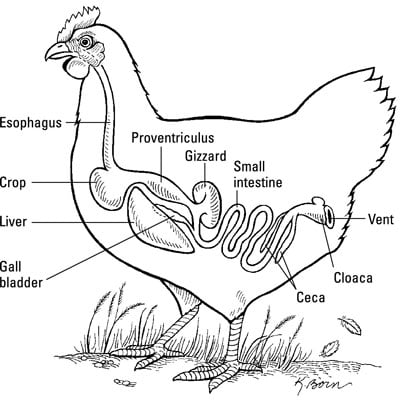
A chicken's digestive system.

1. What is that lump on the side of a chicken’s neck?

Most likely, the lump on the side of your chicken’s neck is normal. That’s her crop, an expandable pouch in the esophagus of chickens and many other types of birds that is part of the digestive system. Think of that anatomical feature as a doggie bag — a place for the foraging hen to store her edible discoveries for digestion sometime later in the day.
Rarely, a chicken’s crop plugs up because she’s eaten a lot of indigestible stuff, such as straw, wood chips, or long, stemmy weeds. The condition is known as a crop impaction, and it can be serious. If you’re concerned that the hard lump may be an impaction, feel the chicken’s neck early the next morning, before she has eaten breakfast. The lump should be gone, and her throat should feel soft and empty.

2. Why is a chicken losing her feathers?

Molt happens. Each year, usually in autumn, a chicken loses her old feathers and grows a new set, in an orderly process called molting. Most hens slow down on egg production or quit laying eggs altogether while they’re molting. Some hens molt quickly and get it over with in two to three months, although others can take as long as six months to freshen their appearance.
If your chicken is losing her feathers, suspect molt first.
Other common causes of feather loss include feather pecking (flock mates are plucking out feathers) and external parasites (mites or lice, usually). You may be able to blame the hens’ bare backs on the rooster’s attention — he’s scratching feathers out during mating.

3. Why do some eggs have soft shells or no shells?

Stress is the number-one cause of abnormal eggshells in hens, including soft or shell-less eggs. Events that stress hens are disturbances that are likely to bother you, too; moving to a new home, meeting a guest’s rambunctious dog or child, hot weather, or a sudden and violent storm are common stressors. A single disturbance can affect a flock’s egg production for a couple of weeks.
Besides stress, other explanations may fit. Older hens and hens that have been in lay (producing eggs) for many months are more likely to lay soft-shelled eggs. Viral infections can also mess up a hen’s egg-laying machinery, sometimes permanently.

4. How do you treat a chicken’s skin wounds?

The most common backyard chicken wounds are the result of predator attacks, flock-mate aggression, and entanglement or impalement by something sharp in the chicken yard, such as broken wire fences or protruding nails.
Treat predator bite wounds and other skin wounds as soon as you discover them.
Thoroughly flush the wound with an antiseptic solution.
Isolate the injured bird from the rest of the flock and let her take care of the wound herself.
Talk to your veterinarian before medicating a chicken with an antibiotic.

5. What causes your chicken to have runny poop?

Having loose droppings can be normal if they’re intermittent with normal, formed poop. Two or three times a day, a chicken empties the contents of the ceca, which are two blind pouches in the lower part of the digestive system. The cecal droppings are loose, brown, very smelly, and completely normal for chickens.
If all the chicken’s droppings are runny, however, that’s abnormal, so look for a health problem. Heading the list of possibilities for adult bird diarrhea is hot weather, which is a very common reason for laying hens to have loose droppings. Take this sign as a warning to ease the flock’s heat stress.

6. Should you feed chicks medicated starter feed?

Yes, you should feed your chicks medicated starter feed, except under two conditions: Your chicks were vaccinated for coccidiosis or you’re trying to raise chickens under organic conditions.
The medication in medicated chick starter is a coccidiostat, a drug that helps prevent coccidiosis. Before the invention of coccidiostats, raising chicks without losing some to coccidiosis was a big challenge for flock keepers.

7. Is it safe to eat a hen's eggs after you medicated her?

Any medication given to a laying hen can end up in the eggs that she produces, sometimes for several weeks after being dosed. Very few medications have been studied thoroughly to determine how long they’ll contaminate the eggs of medicated hens, and therefore, very few medications have been approved for use in laying hens.
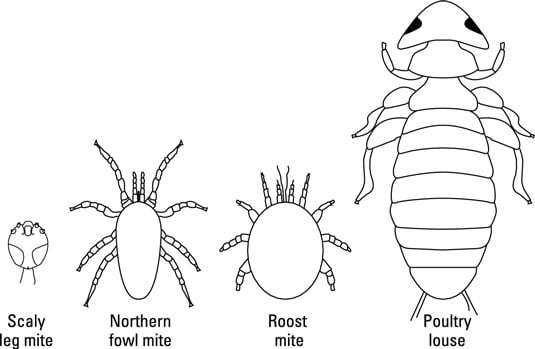
The usual external parasites that affect chicken.

8. What are these bugs crawling on your bird (and you)?

They’re lice or mites, almost certainly. These extremely common external parasites feed on your chickens, irritating and weakening them. Lice and mites can crawl on you, too, if you handle infested birds. Although chicken lice think people taste disgusting (they won’t hang around for long), mites will happily bite a person before running back to their preferred host — your chicken.

9. What is causing your hen’s swollen foot and her limping?

Bumblefoot is a common infection of the feet of poultry, usually discovered as a swollen, scabby foot pad. The problem starts with minor trauma to the foot, such as a bruise, scrape, cut, or puncture. Bacteria invade the small foot wound and create a big mess, causing pus-filled abscesses, swelling, and pain. Treatment isn’t quick or easy, and it usually requires repeated draining and cleaning the wound.

10. Can you feed bugs and worms to your flock?

Bugs and worms are yummy and nutritious (for your chickens). A chicken isn’t a vegetarian by nature, and she relishes a nice, juicy bug, which is typically loaded with nutritious fat and protein.

Thursday, June 20, 2019

Chicken Keeper / 5 Summer Vacation Tips

5 Summer Vacation Tips for Backyard Chicken Keepers

Make Sure You're Prepared to go on Summer Vacation When Raising Chickens for Eggs


5 Summer Vacation Tips for Backyard Chicken Keepers
 

Going on a family vacation isn’t impossible when you raise backyard chickens, but it does require some careful pre-planning to ensure your flock stays safe, healthy and happy while you’re gone. Here are five summer vacation tips for keepers of backyard chickens to make everything go more smoothly and allow you to sit on the beach and enjoy your vacation:

1) Enlist a Friend, Family Member or Neighbor

When you have backyard chickens and go on vacation, it’s always a good idea to have someone stop by at least twice a day to let the chickens out, feed them, collect eggs, be sure they have clean water, and then lock them up each night. Even if you have an automatic coop door, it’s still a good idea to have someone stop by to make sure everyone is safely locked up before dark. Installing some Niteguard solar predator lights is also a good idea in case your chicken ‘caretaker’ is late or forgets to come back to lock the coop one night.
If you can’t find a neighbor or friend willing to commit to the task of caring for your backyard chickens, try your local 4-H club or extension service for recommendations or check your feed store boards for dog walkers, pet sitters or people who offer horse boarding services — many times they will agree to come check on your chickens for nominal pay — or even merely the promise of fresh eggs. Use caution when asking another chicken keeper to watch your flock. Be sure to provide them with footwear outside your coop or run to wear while they are tending your flock to avoid cross-contamination. A bleach water footbath is also a good idea to fill and leave by the run entrance.

2) Stock up on Feed, Supplements, and Treats for Your Backyard Chickens

Make sure the person watching your flock knows what to feed chickens before you leave! You’ll want to either fill your feeder with enough feed to last until you come back or leave your caretaker instructions on how much to dole out each morning (figure on 1/2 cup of feed per hen per day) and be sure the feed is stored in a mouse-proof container out of the sun and rain. If the forecast while you’re away calls for hot temperatures, leave instructions for your caretaker on how to keep chickens cool in the summer, too.
Be sure to stock up on grit, oyster shell and of course feed, and be sure to label all the containers and leave instructions for refilling your dispensers and how many treats to hand out. You might also want to print out this list of safe treats for your chickens and leave it out as guide, as well as what not to feed chickens. A head of cabbage or a halved watermelon or cucumber is always an easy, nutritious treat choice that will keep your chickens busy and hydrated, so leaving either (or both) to be fed while you’re gone is a great idea.


backyard chickens food and treats

3) Clean The Coop

You’ll want to clean the coop and put in new litter just before you leave. Sprinkling some herbs in your nesting boxes, like my Herbs for Hens Nesting Box Sachets, can help repel rodents and insects while you’re gone. A sprinkle of food-grade Diatomaceous Earth on the floor of the coop and in the nesting boxes can also help repel mites and lice, and a product such as Dookashi or Chick Flic helps reduce ammonia fumes, a concern especially during the hotter months. Again, be sure to leave instructions and everything in clearly marked containers or packages.

4) Inspect The Coop and Run

A careful examination of your coop and run is in order before you go. Look for any loose boards or wires, any holes in fencing or things that need to be shored up or repaired. Predators get used to routines and always seem to know when there’s not one home and it’s a good time to strike.

5) Leave Your Vet’s Contact Information

Speaking of predators, be sure to leave your vet’s phone number and address out for your chicken sitter, along with your Chicken First Aid Kit in case of injury, illness or attack. If your chicken sitter notices any sick chicken symptoms, they shouldn’t hesitate to check with the veterinarian immediately. It’s also a good idea to leave the telephone number of a friend who keeps chickens and might be able to help out if your caretaker doesn’t raise chickens themselves and there’s an emergency.


backyard chickens home remedies


Lastly, ask your caretaker to come by and do a walk through of your morning and evening routine before you leave, so they will be familiar with your routine and also so the chickens can get to know them. Chickens love routines, so the closer they can stick to your routine, the better.

Monday, June 3, 2019

Chickens with Heat Stress

10 Signs of Chickens in Heat Stress
Keeping cool can save a life!


 While their feathers are beautiful, all that fluff is tough on our feathered fam. Unlike people, chickens don't have sweat glands nor do their feathers allow for a cool breeze to take that summer heat off. Because of that, it’s important to stay vigilant about keeping your flock cool in the summer to prevent heat stress.
What is heat stress?
Heat stress is additional stress to the body due to increased temperatures. A chicken’s normal body temperature is around 104°F, so a chicken does a lot better in colder weather than it does in hot weather! Heat stress can damage organs, cause egg deformation, and even death.
What affects heat tolerance?
Genetics, feather coverage, age, weight, and drinking water temperature all affect a chicken’s heat tolerance. If you have cool drinking water, your bird can cool from the inside out. Similarly, if a chicken has fewer feathers, air can get in between them and cool the skin.
Signs of Heat Stress:
1. Panting & Rapid Breathing
Much like dogs, chickens release heat by panting to dissipate the heat. Look out for panting (beaks open) and rapid breathing.
2. Pale Combs/Wattles
The combs and wattles are a chicken’s only direct access of skin to air, so a lot of the heat leaves through there. Keeping the wattles cool will help your chicken regulate its body temperature.
3. Loss of Electrolytes
Similarly to how your high school coach encouraged you to drink Gatorade after a hot practice, sometimes your chickens need a helping hand. When you notice your chickens showing signs of heat stress, they’ve likely lost some electrolytes which need to be replenished.
4. Wings Outstretched and Feathers Erect
Air is our planet’s best insulator. We could get into the thermodynamics, but what you do need to know is that your chickens are doing everything they can to get some air in between their feathers. When they overheat, they’ll stretch out their wings and lift their feathers in hopes of catching a cool breeze.
5. Bird Stop Eating & Drink Large Amounts of Water
Just like your desire to guzzle water after hot day, your hen will start drinking A LOT more water. Unfortunately, her nutritional needs don’t change, so it’s important she’s still eating enough feed. To make sure she’s getting all the protein and calcium to make healthy eggs, try these nutritious snacks.
6. Diarrhea
What goes in must come out. All of that extra water can lead to watery diarrhea, which means more electrolytes lost.
7. Chicken Becomes Droopy
A malnourished chicken suffering from heat stress is about as energetic as an old pug. In order to conserve what precious energy she has, your chicken becomes lethargic. She doesn’t have any energy to do much of anything else.
8. Decrease in Egg Production Decreases, Thin Shells
With her body under lots of stress to keep cool, egg production decreases. Calcium isn’t absorbed which leads to soft shells. Eggs are mostly water, and with dehydration, there isn’t enough for both of them.
9. Staggering, Disorientation and Seizures
This is when heat stress can turn into heat stroke. Immediate action is necessary to save your bird!
10. Collapse of System and Death
If nothing is done to save your chicken, he or she will die from organ failure due to dehydration and heat.
Fortunately heat stress is very preventable with a few easy adjustments to keep your chickens healthy and comfortable.