Search This Blog

Thursday, June 20, 2019

Chicken Keeper / 5 Summer Vacation Tips

5 Summer Vacation Tips for Backyard Chicken Keepers

Make Sure You're Prepared to go on Summer Vacation When Raising Chickens for Eggs


5 Summer Vacation Tips for Backyard Chicken Keepers
 

Going on a family vacation isn’t impossible when you raise backyard chickens, but it does require some careful pre-planning to ensure your flock stays safe, healthy and happy while you’re gone. Here are five summer vacation tips for keepers of backyard chickens to make everything go more smoothly and allow you to sit on the beach and enjoy your vacation:

1) Enlist a Friend, Family Member or Neighbor

When you have backyard chickens and go on vacation, it’s always a good idea to have someone stop by at least twice a day to let the chickens out, feed them, collect eggs, be sure they have clean water, and then lock them up each night. Even if you have an automatic coop door, it’s still a good idea to have someone stop by to make sure everyone is safely locked up before dark. Installing some Niteguard solar predator lights is also a good idea in case your chicken ‘caretaker’ is late or forgets to come back to lock the coop one night.
If you can’t find a neighbor or friend willing to commit to the task of caring for your backyard chickens, try your local 4-H club or extension service for recommendations or check your feed store boards for dog walkers, pet sitters or people who offer horse boarding services — many times they will agree to come check on your chickens for nominal pay — or even merely the promise of fresh eggs. Use caution when asking another chicken keeper to watch your flock. Be sure to provide them with footwear outside your coop or run to wear while they are tending your flock to avoid cross-contamination. A bleach water footbath is also a good idea to fill and leave by the run entrance.

2) Stock up on Feed, Supplements, and Treats for Your Backyard Chickens

Make sure the person watching your flock knows what to feed chickens before you leave! You’ll want to either fill your feeder with enough feed to last until you come back or leave your caretaker instructions on how much to dole out each morning (figure on 1/2 cup of feed per hen per day) and be sure the feed is stored in a mouse-proof container out of the sun and rain. If the forecast while you’re away calls for hot temperatures, leave instructions for your caretaker on how to keep chickens cool in the summer, too.
Be sure to stock up on grit, oyster shell and of course feed, and be sure to label all the containers and leave instructions for refilling your dispensers and how many treats to hand out. You might also want to print out this list of safe treats for your chickens and leave it out as guide, as well as what not to feed chickens. A head of cabbage or a halved watermelon or cucumber is always an easy, nutritious treat choice that will keep your chickens busy and hydrated, so leaving either (or both) to be fed while you’re gone is a great idea.


backyard chickens food and treats

3) Clean The Coop

You’ll want to clean the coop and put in new litter just before you leave. Sprinkling some herbs in your nesting boxes, like my Herbs for Hens Nesting Box Sachets, can help repel rodents and insects while you’re gone. A sprinkle of food-grade Diatomaceous Earth on the floor of the coop and in the nesting boxes can also help repel mites and lice, and a product such as Dookashi or Chick Flic helps reduce ammonia fumes, a concern especially during the hotter months. Again, be sure to leave instructions and everything in clearly marked containers or packages.

4) Inspect The Coop and Run

A careful examination of your coop and run is in order before you go. Look for any loose boards or wires, any holes in fencing or things that need to be shored up or repaired. Predators get used to routines and always seem to know when there’s not one home and it’s a good time to strike.

5) Leave Your Vet’s Contact Information

Speaking of predators, be sure to leave your vet’s phone number and address out for your chicken sitter, along with your Chicken First Aid Kit in case of injury, illness or attack. If your chicken sitter notices any sick chicken symptoms, they shouldn’t hesitate to check with the veterinarian immediately. It’s also a good idea to leave the telephone number of a friend who keeps chickens and might be able to help out if your caretaker doesn’t raise chickens themselves and there’s an emergency.


backyard chickens home remedies


Lastly, ask your caretaker to come by and do a walk through of your morning and evening routine before you leave, so they will be familiar with your routine and also so the chickens can get to know them. Chickens love routines, so the closer they can stick to your routine, the better.

Monday, June 3, 2019

Chickens with Heat Stress

10 Signs of Chickens in Heat Stress
Keeping cool can save a life!


 While their feathers are beautiful, all that fluff is tough on our feathered fam. Unlike people, chickens don't have sweat glands nor do their feathers allow for a cool breeze to take that summer heat off. Because of that, it’s important to stay vigilant about keeping your flock cool in the summer to prevent heat stress.
What is heat stress?
Heat stress is additional stress to the body due to increased temperatures. A chicken’s normal body temperature is around 104°F, so a chicken does a lot better in colder weather than it does in hot weather! Heat stress can damage organs, cause egg deformation, and even death.
What affects heat tolerance?
Genetics, feather coverage, age, weight, and drinking water temperature all affect a chicken’s heat tolerance. If you have cool drinking water, your bird can cool from the inside out. Similarly, if a chicken has fewer feathers, air can get in between them and cool the skin.
Signs of Heat Stress:
1. Panting & Rapid Breathing
Much like dogs, chickens release heat by panting to dissipate the heat. Look out for panting (beaks open) and rapid breathing.
2. Pale Combs/Wattles
The combs and wattles are a chicken’s only direct access of skin to air, so a lot of the heat leaves through there. Keeping the wattles cool will help your chicken regulate its body temperature.
3. Loss of Electrolytes
Similarly to how your high school coach encouraged you to drink Gatorade after a hot practice, sometimes your chickens need a helping hand. When you notice your chickens showing signs of heat stress, they’ve likely lost some electrolytes which need to be replenished.
4. Wings Outstretched and Feathers Erect
Air is our planet’s best insulator. We could get into the thermodynamics, but what you do need to know is that your chickens are doing everything they can to get some air in between their feathers. When they overheat, they’ll stretch out their wings and lift their feathers in hopes of catching a cool breeze.
5. Bird Stop Eating & Drink Large Amounts of Water
Just like your desire to guzzle water after hot day, your hen will start drinking A LOT more water. Unfortunately, her nutritional needs don’t change, so it’s important she’s still eating enough feed. To make sure she’s getting all the protein and calcium to make healthy eggs, try these nutritious snacks.
6. Diarrhea
What goes in must come out. All of that extra water can lead to watery diarrhea, which means more electrolytes lost.
7. Chicken Becomes Droopy
A malnourished chicken suffering from heat stress is about as energetic as an old pug. In order to conserve what precious energy she has, your chicken becomes lethargic. She doesn’t have any energy to do much of anything else.
8. Decrease in Egg Production Decreases, Thin Shells
With her body under lots of stress to keep cool, egg production decreases. Calcium isn’t absorbed which leads to soft shells. Eggs are mostly water, and with dehydration, there isn’t enough for both of them.
9. Staggering, Disorientation and Seizures
This is when heat stress can turn into heat stroke. Immediate action is necessary to save your bird!
10. Collapse of System and Death
If nothing is done to save your chicken, he or she will die from organ failure due to dehydration and heat.
Fortunately heat stress is very preventable with a few easy adjustments to keep your chickens healthy and comfortable.

Monday, May 20, 2019

Last Order of Chicks THIS WEEK!


Related image
The 2019 Chick season is almost over, our last order will be in this week.
Black Austalorps 25
Buff Orphington 25


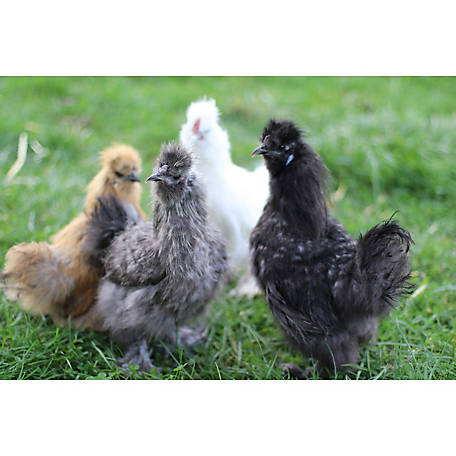
 AND by special request I got one last order of Assorted Silkies!
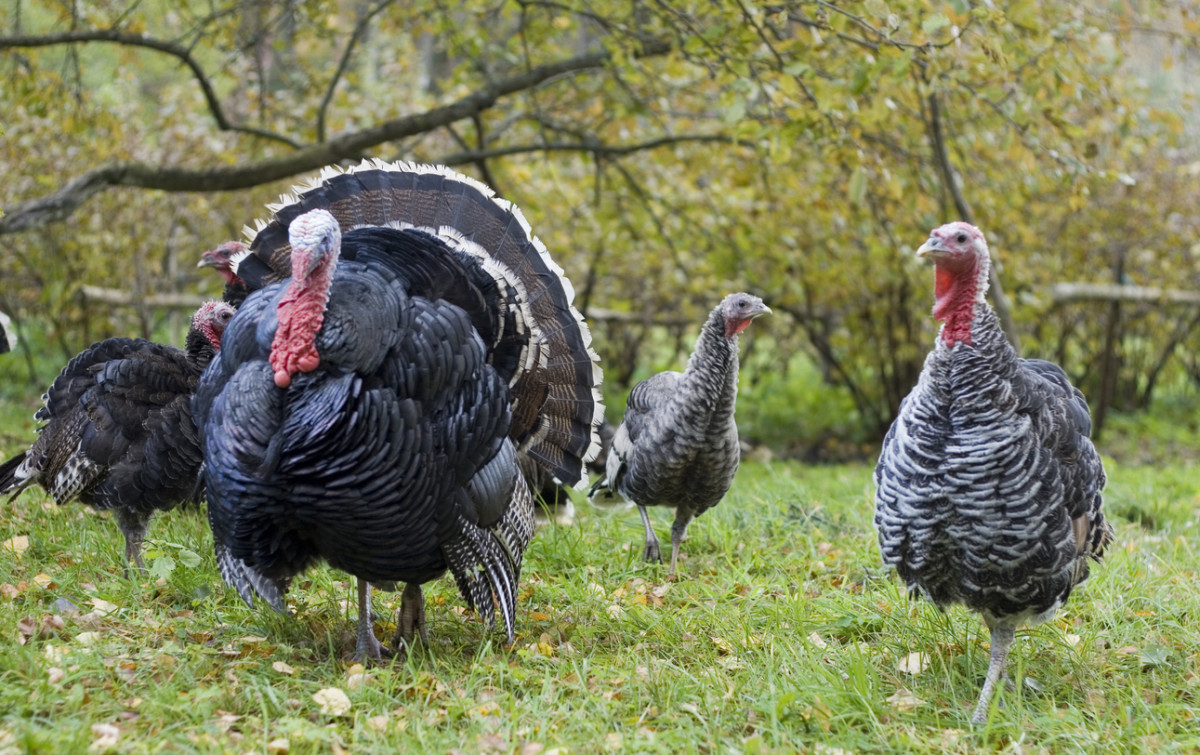
I put in a request of over hatch for some turkeys... does not mean we will get them but if we do i will post. Seems after we sold out last week some people are still looking for Heritage Turkeys.

Image result for BLACK AUSTRALORP CHICKENS

Image result for buff orpington chickens

Thursday, May 2, 2019

!!!!SPECIAL DELIVERY!!!!

BLUE LACED RED WYANDOTTES AND CUCKOO MARANS
COMING FRIDAY MAY 3rd
$3.99 EACH
PLACE YOUR PREPAID ORDERS TODAY
Image result for blue laced red wyandotte chicks
blue laced red wyandotte hen
Related image
Cuckoo Maran
dark brown eggs 

Monday, April 29, 2019

Silkies, Turkeys and Geese, Oh My!

Now that we have moved past Easter Chicks and our brooder is a little quieter, I have ordered some special birds for those expanding their flock. I do suggest if you want these birds you pre-pay. Please call the store and place an order to insure you get the birds you want. Thank You, Anice


Assorted Silkies 5/1 $    (30 ordered)   3.99 each
 Image result for assorted silkie chicks

Geese 5/8         $12.99
African 4 (brown)
Chinese 4 (white)
Image result for difference between african and chinese geese


Turkeys  5/14        $12.99
Bourbon Red  5
Royal Palm ALL SOLD
Chocolate 5
Narragansett 5


Image result for royal palm turkey
ROYAL PALM
Image result for bourbon red turkey
BOURBON RED
Image result for narragansett turkey
NARRAGANETT
Image result for chocolate turkey breed
CHOCOLATE

Friday, April 26, 2019

Keeping Your Chickens Safe

https://www.thehappychickencoop.com/keep-chickens-safe-from-predators/


21 Tips: Keeping Your Chickens Healthy And Safe From Predators


21 Tips Keeping Your Chickens Healthy And Safe From Predators
We all love our fluffy, feathered friends and want to do the best for them. If you already have an established flock or haven’t started yet and are still in the planning stages – this article is definitely for you.
Before I got my chickens I spent the better part of a year researching the breed of chicken I wanted, how to house them and how to keep them safe and healthy.
I was called overly obsessive at times, but so far my efforts have paid off dividends as my girls are healthy and happy and we haven’t had any issues with predators in 5 years.
Today I have put together my favorite 21 tips for keeping your chickens safe from predators and healthy.

Coop Defenses

Protecting your flock from predators starts with the coop.
Whether you buy it pre-made or build the coop yourself, there are several simple things you can do to make it safer for your chickens.

1. Know The Enemy

First of all you, need to be aware of likely predators in your area: foxes, hawks, owls, coyotes, raccoons and possums tend to be the most common.
If you know which predators are likely to attack you can create effective defenses to stop them.
Some of these predators are very smart, others opportunists. Each can be deterred by simple backyard security.

2. Bury Chicken Wire

The Best Chicken Wire
Yard Guard Netting
If you are constructing a run, it’s important to remember that many predators will try to dig under the run to attack your girls.
One thing to remember: chicken wire will keep chickens in; hardware mesh will keep predators out.
A determined, hungry animal can and will break through chicken wire.
When building your run, make sure you bury hardware mesh at least 2 feet deep around the compound- 4 feet deep would be ideal.

Chicken Coop Buried Chicken Wire
Dig a trench about 6 inches deep and 3 inches wide and bury the hardware mesh to create an underground security perimeter.
This will deter most predators from digging.
If you are using a chicken tractor instead of a run, the same principal applies. Cover the floor of the tractor in hardware mesh to prevent predators digging their way to your chickens.
Note: Occasionally when chickens stand on wire floors in chicken tractors for long periods of time their feet can get cut, so check their feet regularly for cuts or sores.

3. Cover Their Coop

If you live in an area with lots of hawks and owls you will need to place a cover over your run.
You can use chicken wire to cover your run- this still provides your chickens with visibility but stops any air-bound predators swopping down and attacking your flock.
If you want your birds to have some shade, as well as protection, you could use a tarp sheet instead of chicken wire.

4. Increase Visibility

If you are fortunate enough to have a large garden, make sure you cut down any tall grass, bush or overgrown areas within 50-75 feet of your coop.
The less cover a predator has, the more vulnerable they are at being seen before attacking.
This with thwart less confident predators, as they won’t risk exposing themselves to attack.

5. Block Any Access Holes

Make sure you regularly check your coop for any access holes.
Even small trivial gaps/holes can be used by predators to gain access to the coop- a weasel can squeeze through a ½ inch hole.
You do not want a weasel in your coop.
A weasel will kill seemingly for the fun of it and can kill a moderate size flock in a night.
Remember to check your coop at least monthly for signs of attempted entry and reinforce those areas.

6. Lock Your Ladies Up At Night

Most importantly, remember to lock up your ladies at night!
Use a mechanism that can’t be opened by smart creatures. Raccoons are notoriously intelligent and they can open simple locks & bolts.
I like to use a Carabiner because it requires opposable thumbs to use.
Also remember to use a padlock to keep out the ultimate predator – man.
Unfortunately several of my friends have had their chickens stolen either for dinner, or because it’s a rare breed.
I use three locks on my coop – two on the entrance door and a separate lock for the ‘pop’ door.

7. Check Your Biosecurity

Make sure you clean up your pen in the evening after your chickens have gone to roost- pay special attention to any scraps and food lying around.
We may not think of rats as predators, but they are attracted by leftover food. Once they have moved in to the neighborhood, they can and will eat eggs and chicks.
If you see rats during the daytime, it’s likely you have a serious problem.
Note: Rats dislike daylight so only the ones lower in the hierarchy will risk a daylight raid.

8. Be Alert For Snakes

Check your coop daily for snakes. Black, rat and corn snakes will pilfer eggs and on occasion, small chicks. They can simply be re-located to another area if necessary, although snakes do help keep down the vermin.
Snake In Birds Nest
If you find that certain snakes keep returning to your coop, you will need to capture them and relocate them elsewhere.

9. Collect Eggs Daily

A lot of predators will only break into your coop to get eggs.
If you make sure to collect your eggs frequently during the day you will deter many predators- especially rats and snakes!

10. Fit Motion Sensor Lighting

Predators such as raccoons will only attack in the dark at night.
You can fit solar powered motion-detection lights to your coop to stop predators attacking.
The light will turn on when it detects any motion near the coop. They can also be modified to send you an alarm when the lights are activated.
Most predators will simply run away from the spotlight.

Free Ranging Defense

Whilst it’s relatively easy to secure a chicken coop and run, what do you do when your chickens are free-range?
Keeping free range chickens safe is hard but not impossible if you follow the tips below.

11. Hang Your Old CDs

If you have free ranging hens it can be more difficult to protect them against birds of prey.
One effective way I’ve found is to hang unwanted CDs from trees, posts etc.
The reflection of the sun from the CD will deter them. You can also use pie pans, disco balls – anything that will reflect light.
Note: Do not use mirrors; you don’t want to accidentally start a fire!

12. Use Electric Fences

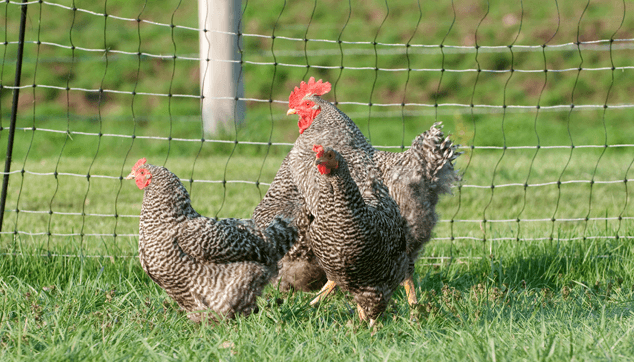
If your chickens are free-ranging you can erect an electric fence around the perimeter to keep predators away.
They are fairly inexpensive and easy to install.
I don’t personally use electric fences, but people I know who have them swear by them.

13. Install Safety Shelters

Sometimes with birds of prey they can get extremely desperate and will attack no matter what.
Make a couple of safety shelters for your birds to run into. You can use a 55 gallon plastic drum cut lengthways or a wooden pallet perched on blocks.
Safety Chicken Shelter
If your chickens get caught out whilst they are roaming they can run underneath these safety shelters to keep covered.

14. Get Roosters

Within town and city limits there are usually restrictions on having roosters – they can be a noisy pest to your neighbors.
Establishing The Pecking Order
There aren’t too many folks who like to be woken up at the crack of dawn by a rooster crowing his head off!
However, if you live in the country it’s usually ok.
A good rooster will protect his ladies and will give his life to preserve theirs.
Note: Make sure to research the breed of rooster you want thoroughly before you jump in and get one.

15. Use Guard Dogs

A guard dog does the same job as a rooster – only better.
Dogs can range further away from the flock and the scent of a dog is very disturbing to most predators, so they will likely leave your flock in peace.
Make sure your dog is good with your chickens before you leave them together unattended. You don’t want your guard dog turning into the predator!

Hygiene and Cleanliness

Chickens are inquisitive creatures. They love to investigate new things and this can get them into trouble! The following tips will help you be more aware of potential hazards to your flock.
To keep your chickens safe you need to do more than just keep the predators at bay. Sometimes the biggest threats are already in your garden.

16. Avoid Toxic Chemicals

Weed killer and other commonly used garden chemicals (Insect Baits/Traps etc.) can be accidentally ingested by chickens.
As with small children, keep your flock away from any area of your garden which you may have sprayed or treated. Also keep the chemical bottles well away from your girls.
If your chickens do ingest any toxic chemical call your vet immediately.

17. Botulism

For those of you that haven’t heard of the term Botulism before, it’s a “rare poisoning caused by toxins”.
If you use poison to keep the rodent population in check, be aware your chickens can be poisoned by pecking at the carcass. You should dispose of any dead animals you find somewhere they can’t be accessed.
Botulism can also be caused by fouled drinking water (usually by ducks). If you keep ducks, make sure the chickens don’t make a habit of drinking water which the ducks have pooped in.

18. Clean Their Feeders

Following on from Botulism you need to keep food and water dishes clean.
I use a 1:10 bleach solution weekly in all my feeders and drinkers.

19. Keep Their Feed Fresh

Ensure your feed is fresh and not moldy.
Keep it stored in waterproof containers – plastic totes, garbage bins or something similar. Moldy feed can and does kill chickens, so make sure the lid for your containers is airtight also.

20. Keep Their Coop Tidy

A dirty coop not only attracts flies but can cause a number of health issues for your birds.
For instance high levels of ammonia can cause blindness and respiratory issues. I normally clean my coop once a week and occasionally more during winter. A good test is if you can smell ammonia in your coop – cleaning is overdue!

21. Ensure Regular Health Checks

Last but by no means least is regular health checks.
Try to check your birds visually every day.
Included in your visual health check should be a vent check. They can get matted and poopy back there- this creates a perfect environment for flystrike.
Cleaning Chicken Vent
Checking Chicken’s Vent
If it’s dirty – clean it.
Go gently using soap and water. Sit the bird in the warm water and try to soak off the matted area. You may have to trim some feathers.
These 21 tips will definitely help keep your chickens healthy and the predators at bay!

Tuesday, April 16, 2019

EASTER CHICKS ARE HERE!


Image result for baby chicks
Easter has always marked the beginning of Spring for buying baby chicks, ducks and bunnies as well as starting vegetable and flower gardens. Each year we order our Easter Chicks in January to assure we have a brooder full for those that follow this tradition.


This week our brooder will be over flowing with lots of baby chicks,. Here is our line up


One day old chicks
Ameracana
Barred Rock
Black Austalorps
Buff Brahmas
Light Brahmas
Buff Prphington
Golden Comets
Rhode Island Red
Gold Wyandotte
Silver Wyandotte


We have some week old chicks as well
Golden Comets
Rhode Island Red
Black Giants
Buckeyes


Two week old
Amberlinks


Also have some White and Bronze Turkeys