Search This Blog

Monday, October 16, 2017

Free-ranging Chickens


Free-range hens: What you should consider before letting your flock out.


Description: free flock 2.jpg


By Angelina on July 15, 2010


If you have (or are thinking about getting) a backyard flock of chickens you should consider the possibility of letting your flock free-range.  Chickens are foraging animals and thrive best when they can hunt for insects (and lizards!) and greens which no chicken run provides.  Being able to scavenge the lawn for worms, to pluck at grass and weeds, and to explore is deeply satisfying to them. 

We let our first flock of hens free-range a couple of hours a day (the last couple of hours of daylight) and they loved it.  It was wonderful to sit out in my garden and listen to the hens scratching, cooing, and scuffling.  If I was doing yard work they would follow behind me to see what interesting activity I was up to. 

By the time we got our second flock of hens we had a dog.  The dog went wild when she saw the birds in the coop the first time and Philip had to train her to not get excited around them.  Between that and the fact that the yard wasn't properly fenced, we never let this flock free-range.  Naturally I was scared of the dog killing the chickens because I've known quite a few chicken-killing dogs.

At our current house the fencing isn't an issue and we've been wondering for a long time whether or not our dog might be trained not to kill the hens if we let them out.  So we planned to do some experiments with the dog and the birds this summer but in the end the whole question of the dog versus the hens was effortlessly answered while Philip was working on building the new coop one evening.  He had to have the chicken run door open for some reason, the dog was close by, the access was there, and nothing happened.  The chickens ventured out and our dog continued to watch them with no more than casual interest. 

Just like that we are now able to let them free-range and I can tell you that they are very excited about the yard!

It worked for our flock this time, but will it work for yours?  There are some things you need to consider before letting your flock free-range in your yard:

  • Fencing: especially in a suburban environment, you need to make sure your fencing is secure.  It should be 6' tall (most hens won't fly such a tall fence, though it isn't impossible because chickens did start out as jungle birds who lived in the trees) and it should not have any gaps in it big enough for the chickens to get out through.  It is equally important that no neighborhood dogs can get in to your chickens.
     

  • Dogs:  if you have a dog you need to make sure of your dog's feelings about the chickens before you simply let them out.  A dog who wants to kill a chicken will accomplish the job so quickly you will not likely have time to save the situation.  If anyone has any tricks or tips on training dogs to be mellow about chickens please share! 
     

  • Mess:  Chickens poop, a lot.  They do it whenever they need to and don't care where it lands so your yard will be scattered with their droppings.  I have never minded this.  They tend to prefer being in the dirt, the lawn, or under foliage rather than on pathways and decks, so I don't mind a little mess from them.
     

  • Scratching:  Chickens forage by scratching at the ground with their strong clawed feet.  This is how they unearth seeds and grubs.  They will make holes in the garden.  They can be quite devastating to shallow rooted plants.  One of their favorite things to do in the warm weather when it's hot is to find a shady spot in the dirt and dig themselves a shallow hole to dust themselves up in.  I find this charming except when they unintentionally expose the roots of nearby plants. 
     

  • Snacking:  While it's true that chickens will often hunt down your slugs and snails and also enjoy plucking at a wide range of weeds, they really have an all-inclusive palate.  This means that they will equally enjoy snacking on young vegetable seedlings, flowers, rose leaves, and peck around any available fruits or vegetables. 
     

  • Getting them back in the coop:  Come dusk most chickens will automatically find their way back to the safety of their coop.  They are almost night blind so as the light begins to fade they will wander closer back to safety until they put themselves to bed.  Letting your hens free-range puts a responsibility on you to make sure that they've all made it back into the run and/or coop before dark and that you LOCK them in.  Sometimes a hen will get flustered and not find her way back before it's too dark and she'll just settle down right wherever she is and hope for the best.  The best does not usually come to hens sitting out all night without protection.  Weasels, snakes, skunks, and most of all, raccoons all want to eat your birds and they are just waiting for an opportunity to snatch them.  Nightfall is when most of them come hunting*.  So if you can't commit to locking your birds in at dusk every single night, you should not let them out.
     

  • Birds of Prey:  Although I haven't personally had a problem with chicken hawks or other birds of prey, you need to know if that might be a problem where you live as Belinda pointed out in the comments.  A large hawk can carry a chicken away, but especially vulnerable are smaller breeds such as banties.  If you don't know if you have such birds of prey in your area, ask the poultry experts** at your local farm store.


    With my first flock I started off letting them free-range all day long but after experiencing the damage they did to my most tender vegetable plantings I decided to only let them out during the last two hours of daylight (generally when I liked to be in my garden too) so I could watch over them and scare them off of any fresh plantings.  This served me very well.  The girls got some well deserved foraging in and some freedom but didn't have enough time to do much damage.  The reason I let them out at the end of the day, instead of in the morning, is because not all chickens are easy to catch when they don't want to be caught, but all chickens naturally return to their roost as it darkens which cuts down on work for me.

    If I had a bigger property and could fence off my vegetables I would let my flock free-range all day.  But even a couple of hours a day will improve the quality of life your flock enjoys, not to mention the vastly improved quality of the eggs they reward you with.  It's true!  The more your birds get to forage on weeds and bugs and dirt the richer their yolks will be. 

    Not everyone who keeps chickens will be able to let them free-range.  What can you do to improve your flock's quality of life in a run?  Here are three things you can do:

  • Weed toss:  When you weed your yard, toss the fresh weeds into the chicken run.  The bigger the pile you give your flock the happier they'll be scratching around in it, eating the leaves (rich in vitamins!) and looking for any attached bugs.
     

  • Be sure to give them straw in their run: This gives them a satisfying feeling of digging, which makes a nice rustling noise as they work through it.  When it's time to put new straw in the run I bring it in a big chunk and don't spread it around.  The birds like to do this themselves and you'll find they do a great job of distributing it around the run.
     

  • Kitchen scraps:  I think if birds can't go looking for treats it's important to give them treats from the kitchen.  No grains (except fresh corn!) because if you feed them commercial feed they're already getting all the grain they need, and avoid giving them potatoes.  Otherwise you can give them anything.  You'll probably find that they have preferences (mine won't eat carrots but LOVE turnips, for example).  The scraps will enrich their diet, which will enrich their eggs, and it's a way to compost some of your kitchen scraps.

    There are two sounds I like best in the world:  the first one is the sound of my kid laughing, the second one is the sound my chickens make when I toss them watermelon scraps, a quiet clucking and cooing which I think is more soothing than the sound of fountain water in a garden.
     

Monday, October 9, 2017

Grit and Oyster Shell?

Image result for chickens scratching


Why do Chickens need Grit and Oyster Shell?

Someone asked me the other day why chickens eat their own eggs. My answer to this question is pretty simple, “Chickens are smart, if they need something in their diet they are not getting, they will find it”. What they need in their diet when they are eating their own eggs is,  1) calcium from the egg shell and 2) protein from the egg. Which leads to the question of, supplementing with Oyster shells and or Grit. And what is what?

So why do they need grit? Chickens don’t have teeth so they use this (insoluble) grit to grind down their food. If they are free ranged they can find it for themselves. If they are in a coop most or all of their lives, you will need to provide them with their needs. Layer Chicken feeds do provide both grit and oyster shells, and the bag will tell you there is no need to supplement, that the food is fully digestible, but is it enough? If you are only feeding food scraps, treats or scratch feed, to chickens in a coop, yes, you need oyster shells and grit.

Chickens have this thing called a gizzard. You know what that is, they fry or steam them at your local chicken place for a tasty chewy  treat.  In a chicken, before food get to the gizzard there is this thing called, the proventriculus, food is mixed with acids and digestive enzymes. Then on to the gizzard where (insoluble) grit accumulates, which with a strong muscular action, grinds the food down. So to digest their food correctly, chickens need insoluble grit. It is cheap enough to buy so it’s easy to provide some, just to make sure they are getting enough.

Grit- VS- Oyster Shell

Oyster shell also called Soluble Grit (the most common being Oyster shell grit) often gets confused with Insoluble grit. Insoluble grit is usually made of granite or flint.

Don't confuse oyster shell with grit.  Grit is insoluble.  It stays in the gizzard and it's used to grind food.  Oyster shell dissolves in the gut. Its job is not to do with digestion - it's to add calcium to the diet of laying hens, for optimum health your chickens need both .


Soluble grit (oyster shell) is digested by the hen and contains calcium, most of which is used to form strong egg shells. The majority of an egg-shell is made up of calcium carbonate and a constant supply of oyster shell grit ensures they have sufficient calcium in their bodies. If sufficient calcium isn’t available, hens can lay soft or poor quality shelled eggs.

As an alternative to oyster shell grit, baked crushed egg shells can also be used since they are mainly calcium carbonate too. Hopefully you will have a good supply of egg shells!

Do all chickens need oyster shell?

No, absolutely not.  Chickens who aren't laying will get enough calcium from their normal feed.   Only hens who are laying eggs need to be given additional calcium in their diet - when they're in active lay, they use four times as much calcium as a non-laying hen. Giving additional calcium to chickens who are not layers is detrimental to their health - it can damage their kidneys and is potentially fatal.

Why do laying hens need oyster shell?

Making egg shells takes a lot of calcium, and some laying hens create one egg each day.  That's a lot of calcium.

If a hen doesn't have enough in her diet, her body will steal calcium from her bones to create the egg shell.  That leaves bones very brittle with the potential for easy breakages - like osteoporosis in humans. 

Lack of calcium in the diet can also lead to soft-shelled eggs, which in turn can lead to egg-binding, a potentially fatal condition.

Although some commercial feeds contain calcium, it is not enough to supplement the amount a laying hen uses.  She therefore needs to be offered additional calcium in her diet - and oyster shell is an excellent source.

When should a hen be given additional calcium?

Most hens will start to lay when they're about 20 - 21 weeks of age.  Oyster shell needs to be given from around 18 weeks - just before they're due to start laying.

Do not be tempted to give additional calcium supplements in any form earlier than that - it is potentially damaging to a young chicken's kidneys.

Hens who are not laying eggs, and roosters (cockerels) do not need additional calcium. Don't worry about working out who needs what - as long as you offer it freely (i.e. leave it available all the time) they will instinctively know to take it as and when they need it.

Make it available to your flock year round. If hens aren't laying as much in the winter, they will simply slow down on how much oyster shell they take.

How should oyster shell be given?

Different laying hens have different calcium needs.  Not every hen, for example, lays an egg every day.Young hens and all ages of male chickens (cockerels / roosters) do not need additional calcium at all.

For that reason oyster shell should never be mixed in with feed.  Doing this risks damaging the kidneys of those who do not require it.

It is suggested that you give oyster shell grit in a separate container than their chicken feed. Using a hopper or gravity feeder attached to a sheltered wall protected from wind and rain. If you’re on a budget, or want to leave it outside, you can make a hopper out of a plastic flower-pot. Bury half of it in the ground, make sure it has holes in the bottom. Top it up with oyster shell grit. When it rains, it will be able to drain freely through the holes

Chickens will instinctively take as much as they need; those who don't need it will not touch it.

Insoluble Grit (flint or granite) There are different grades of insoluble grit depending on the age of the chicken. Baby chicks should have a very fine mix; as they get older it should be more coarse.

At what age should chicks be given grit?

If you're raising chicks in a brooder, i.e. without a broody hen, do not feed treats (and grit) too early.  Chicks need to learn first what their 'proper' food is, because that's where they will get the balanced nutrients they need. 

I don't recommend giving  treats until they're at least two week old but that's personal preference - with a broody hen they'll eat other foods from a couple of days old and will pick up grit naturally as they peck.

Babies who are eating nothing but a commercially produced starter feed do not need grit. The food is soft enough to be absorbed without the need for grinding.

However, as soon as chicks are given any kind of treat food, or grains such as scratch feed, they need some form of grit.  It doesn't matter whether you think the treats are soft and easily digested - any food other than chick starter requires it.

Grit for babies up to three weeks can be something as simple as bits of sandy soil still attached to a lettuce, or a clod of grass with earth attached.  If using sand it needs to be a builder's or all purpose grade : play sand is too fine and won't aid digestion.  It will go in one end and straight out the other.

Once they're over three weeks you need to look for a 'grower' grit which is coarser; they can use that from three weeks until around two months, after which they will require an even coarser, adult mix.

When do adult chickens need grit?

Adult chickens who are fed only commercial food and do not have access to any other food or treats do not need grit.  The feed is soft enough not to require grinding.

However, just as with baby chicks, once your flock is eating anything else including any form of treats, they need to be given something to help them grind the food.

An adult chicken needs a fairly coarse mix so you need to ask your feed store to make sure you're getting the right grade.  If it's too fine, it will pass through the system without stopping.

Any age of chicken eating anything other than commercial chicken feed needs to have a source of grit freely available. Pecking dirt from the ground may not be enough.

Any age of chickens eating anything other than commercial feed need to have a source of grit.

How to feed Grit?

You can feed grit the same as you feed oyster shells in a hopper or sprinkle it on the ground. Chickens are going to pick it up in their daily pecking and scratching. In free ranging chickens they will scratch and pick it up as they need it in nature. You may not want to mix it due to the fact that some chickens may want or need one or the other. Remember they are smart they will find what they need.

References

https://poultrykeeper.com/keeping-chickens-faq/why-do-chickens-need-grit-oystershell/


Monday, October 2, 2017

Moulting, it's that time again


Image result for molting chickens

I found this a very good article on moulting. Keep in mind it is from Australia so being in the southern hemisphere, their seasons are the opposite of ours in the USA (their Summer is our winter). I really like the way they break it down, and give solid information on moulting.    


Moulting - a natural process
26 September 2004
by M R Ellis, Poultry Branch, Agriculture Western Australia, Reviewed by DPI&F officers - During the autumn, many household poultry keepers, particularly people keeping poultry for the first time, are often puzzled because although their laying birds appear healthy, egg production has markedly declined or ceased altogether.
Department of Primary Industries and Fisheries Some people just accept this situation and hope for an improvement, while others look upon it as a strange disease. This seasonal decline in egg production occurs when birds go into a condition known as the “moult”.

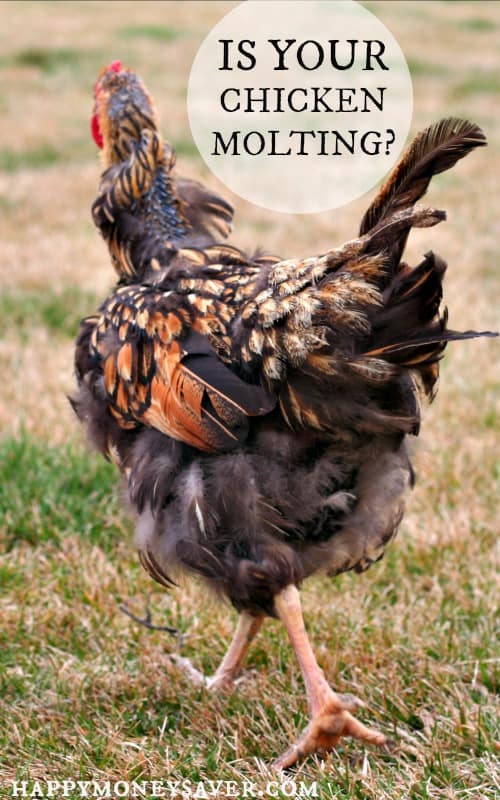
Moulting is the process of shedding and renewing feathers. During the moult the reproductive physiology of the bird is allowed a complete rest from laying and the bird builds up its body reserves of nutrients.

The provision of new feathers or coat (a feature inherent in most animals) is a natural process, designed by nature to maintain the birds' ability to escape enemies by flight and to provide greater protection against cold winter conditions.

Normally, under natural conditions, moulting in adult birds will occur once a year, though it may occur in certain individuals twice in one year, and more rarely only once in a period of two years.

The pullet

The chick goes through one complete and three partial moults during its growth to point of lay, after which the mature bird normally undergoes one complete moult a year, usually in autumn although this depends on the time of the year at which the bird commenced laying. Generally complete moulting occurs from 1-6 weeks and partial moulting at 7-9 weeks, 12-16 weeks and 20-22 weeks, and during this latter moult the stiff tail feathers are grown.

The laying hen

Natural moulting usually begins sometime during March-April and should be completed by July when egg production recommences. The three main factors which bring about moulting are:
  • physical exhaustion and fatigue
  • completion of the laying cycle. Birds only lay eggs for a certain period of time
  • reduction of day length, resulting in reduced feeding time, and consequent loss of bodyweight.
Eleven months continuous production is expected from pullets hatched in season, so that if a flock of pullets commenced laying in March at six months of age, they should continue laying until the following February, although the odd bird may moult after laying for a few weeks. These few birds however should begin laying again after June 22 (the shortest day of the year) and continue in production until the following autumn.

Pullets coming into lay in June should lay until the following April thereby giving eleven months continuous egg production without the aid of artificial light. Pullets coming into lay in spring (August) should lay well into April (9 months) but unless artificial lighting is provided, most of them will moult during May and June. 

Moulting and nutrition

Cessation of lay and moulting indicate that the birds' physical condition is deteriorating, and is therefore unable to support egg production, continued nourishment of their feathers and body maintenance. Feathers contain protein and are more easily grown when laying ceases, because of the birds difficulty in assimilating sufficient protein for both egg and feather production. During the moult the fowl still requires a considerable amount of good quality food to replace feathers and build up condition.

Good layers and moulting

The time at which a laying hen ceases production and goes into her moult is a reliable guide as to whether or not she is a good egg producer. Poor producing hens moult early (November-December) and take a long time to complete the process and resume laying i.e. she will hang in the moult and be out of production for a long period - from six to seven months. Poor producers seldom cast more than a few feathers at a time and rarely show bare patches. High producing hens moult late, moult for a short period (no more than 12 weeks) and come back into production very quickly. Rapid moulting is not only seen in the wing feathers of good producers, but also in the loss of body feathers generally. Because of this it is common to see a late and rapid moulting hen practically devoid of feathers and showing many bare patches over her body.

The moulting process

Moulting takes place in a fairly definite order. Feathers are confined to definite tracts or areas of the body surface, with bare patches of skin between. The first plumage is lost from the head and neck, then from the saddle, breast and abdomen (body), then the wings and then from the tail.

While the first feathers are being dropped from the neck and body, good layers will often keep laying, but when the wing feathers begin to drop, laying usually ceases.

The main wing feathers consist of four tiny finger feathers on the extreme tip of the wing, then ten large primary or “flight” feathers, the small axial feather, and the fourteen secondary feathers, which are smaller and softer than the primaries.

When the wing moults, primary feathers are shed first, from the axial outwards to the end of the wing, and then the secondaries, which are not shed in such a set order as the primaries. The axial feather is dropped at the same time as the secondary next to it. The new quill starts to grow as soon as the old feather is out and takes approximately six to seven weeks to grow. The moult is complete when all primary flight feathers on the wing are replaced. The feathers of the moulted bird are large and full, softer, cleaner, brighter and glossy in contrast to the feathers before moulting which were small and hard, dry, frayed and tattered.

Figure 1 (above). The moulting process. Primary feathers are shed first from the axial feather outwards to the end of the wing. Number 1 primary feather is first to drop followed by a number 2 and then in order to number 10. While the primaries are being shed the secondaries begin to drop but not in any set order

Figure 2. Moulting - a natural process


The difference between a rapid and slow moulter is not due to a difference in growth rate of the individual feather, but because the rapid moulter renews a large number of feathers at the same time. With this knowledge, the rate of moulting can be ascertained by examining the number of flight feathers on the wing being replaced simultaneously. If a hen is found to have grown some of her primaries before starting to moult her secondaries, it may be assumed that she laid well into the moult and was therefore a good layer.

Sometimes, high producing hens do not moult all their primary feathers but carry them on for another year. Generally a layer moults when production ceases although if the bird has an inherited tendency for high production, moulting will probably precede cessation of production, and conversely if she is a poor producer. Modern laying breeds should moult in late autumn because they have been bred specifically for egg production i.e. to lay at a higher rate and for a longer period of time.

Vacation moults, neck moults or partial moults

Old feathers are usually retained by a laying bird which lays regularly. Should she cease production for any other reason than for mild sickness or broodiness she will lose her feathers.

If a hen ceases production during spring or summer, she may moult one or two primaries, then stop moulting and come into lay again. This is known as a vacation moult. When she starts her full moult later in the autumn, she will drop the next feather in sequence and moult in order of the remaining primaries. A neck or partial moult is sometimes experienced by a bird without any loss of production, but if the moulting extends beyond the neck moult stage the hen ceases production.

The presence of “pin” feathers (new emerging feathers) usually indicate a short or partial moult.

Some birds moult continuously and can be easily detected in the flock by the spotless condition of their new feathers. These birds are poor producers and should be culled.

Stress factors and moulting

Natural moults can occur any time of the year due to birds being subjected to stress. A bird is stressed when the environment or management present a challenge to which the bird cannot respond without suffering a harmful effect. A hen subjected to a mild stress condition in late spring when in full production will suffer a drop in egg production whereas the same stress condition applied to a bird in the autumn will cause her to cease laying and moult.

The following are common stress factors which can induce moulting:
  • Lighting
    • decreasing daylight
    • decreasing artificial light
  • Loss of bodyweight
  • Disease
  • Internal parasites
  • Climate
    • excessive cold
    • heat waves
  • Feed, feeding and feedstuffs
    • deficiencies of essential ingredients
    • irregular feeding
    • insufficient feed
  • Predators eg. cats and dogs
  • Fright - wild birds and children
  • Peck order - low vitality
  • Prolonged broodiness
  • Mismanagement: overcrowding, movement to another house, water deprivation, insufficient feed and water space, faulty ventilation, wet litter, debeaking, vaccinations, exposed housing, etc.

Force moulting

Force moulting is a practice adopted by some commercial egg producers to bring about a rapid moult so that all the birds come back into lay for a second time at a certain time of the year, usually in autumn. It is achieved by subjecting a flock to a programmed combination of mild environmental stress factors causing the birds to cease laying and consequently moult e.g. decreasing the artificial lighting programme. Force moulting is a practice not normally applicable to the household situation. Natural moulting is slower and more erratic than force moulting.

Production and moulting

After moulting, the second year of egg production will be between 10 and 30% less than that achieved by the birds in their first year of lay. This is because the rate of lay is lower and the birds cease to lay earlier in the following autumn. Birds which have moulted twice and are laying for their third year will lay only 70 to 80% of their second years eggs i.e. about 60% of their first year's production.

Moulting cockerels

Like hens, cockerels also moult, and while in this condition are nearly always infertile due to loss of bodyweight and because their reproductive physiology is undergoing a resting phase. Care must be taken to ensure that cockerels do not lose more than 25% of their bodyweight while moulting as this can lead to sterility.

Advantages and disadvantages

The advantages of keeping hens during the moult and the following year is fourfold:
  • it is cheaper to carry a bird through a moult than to buy replacement pullets
  • fewer replacement pullets may be needed, and buying can often be deferred, which can mean a saving of money, time and transport
  • moulted birds are hardier, and not as prone to disease
  • if strict culling is carried out during the first year, only high producing, efficient birds will be retained.
The main disadvantage is that although moulted birds eat less feed than pullets, they also lay less eggs. Overall, their conversion of feed into eggs, and feed cost per dozen eggs is higher.

Other disadvantages are:

  • during the moult the birds continue to eat but remain unproductive
  • if the birds are to be slaughtered for the table after two years of laying they will not be as tender to eat
  • too few birds may be retained to provide sufficient eggs the following year.

Year-round laying and moulting

All-year-round egg production can be achieved by purchasing pullets at point-of-lay in the autumn to provide sufficient eggs while the older birds are moulting. When the rate of lay of the pullets declines in the summer, the additional eggs from the moulted birds should sustain an adequate supply. The following autumn the older birds can be killed for the table, the best pullets allowed to moult and another lot of pullets on point-of-lay purchased. In effect therefore, allowing for 20% wastage of pullets due to deaths and culling, only 70% of the normal pullet requirements need to be purchased, and at the same time a relatively constant year round supply of eggs is guaranteed.